
Payment is not a final step: it is part of the sales experience

For years, companies optimized every step of the funnel… except the last one. They attracted leads, improved customer service, trained salespeople, but when it came time to pay, they forced customers to leave the conversation, switch channels, or face unnecessary processes.
In the attention economy, the moment of payment is an emotional decision point.
Any friction, redirects, long forms, confusing links, reopens doubts that were already resolved. And many sales are lost right there, without ever being recorded as real losses.
The problem isn’t the price or the product.
It’s that payment isn’t integrated into the natural flow of the conversation.
The limits of the traditional payment model
In most commercial operations, payment works like this:
- The customer decides to buy
- The seller sends a link or instructions
- The customer leaves the channel
- The process becomes impersonal
- Follow-up is left hanging
This model introduces several risks:
- Drop-off at the final step
- Payment errors
- Unnecessary delays
- Lack of traceability
- Additional operational burden
What conversational payments are (and why they matter)
Conversational payments integrate the payment process directly into the channel where the sale happens: chat, WhatsApp, digital support, or AI-assisted conversations.
That means:
- Customers pay without leaving context
- Sellers maintain control of the process
- The experience remains continuous
- Decisions are executed in the moment
Payment stops being an “external step” and becomes a natural action inside the funnel.
BIKY Pay: when collecting payment is part of the conversation
BIKY Pay, the payment module from BIKY.ai, was built to solve this exact friction point: turning intent into transaction without breaking the experience.
BIKY Pay allows you to:
- Generate payment requests directly from the conversation
- Send contextual payment links
- Track payment status in real time
- Connect payments to the funnel and the CRM
Everything happens within the same operational flow where the sale was made.
This isn’t about “adding a payment method.”
It’s about designing the close as part of the sales system.
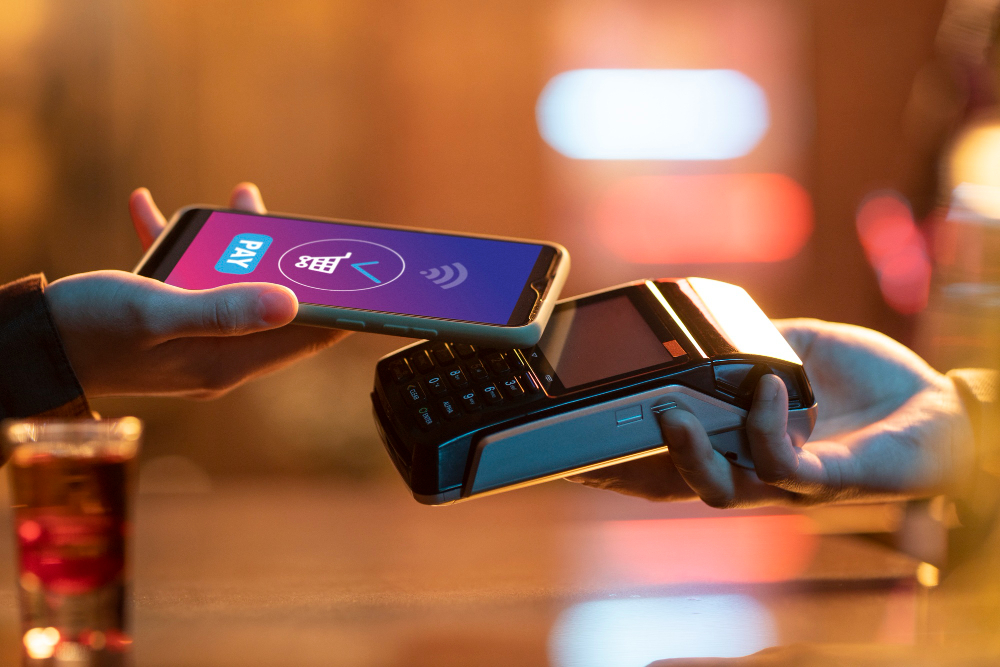
Conversation + payment: direct impact on conversion
From an economic perspective, conversational payments address one of the most expensive funnel leaks: drop-off at close.
When payment is integrated:
- Time between decision and action is reduced
- Unnecessary steps are removed
- Abandonment is minimized
- Cash flow accelerates
This isn’t theory. It’s process design.
A sale closed at the right moment is far more likely to complete than one that’s left “pending.”
Operational comparison: before and after BIKY Pay
Before (disconnected payments):
- Manual link sharing
- Follow-up outside the system
- No visibility into payment status
- Higher error risk
- Administrative overhead
After (BIKY Pay):
- Payment embedded in the conversation
- Real-time status visibility
- Automatic records
- Immediate execution
- Less internal friction
The result is a cleaner, more predictable operation.
Conversational payments and the human experience
A common misconception is that automating payments makes the experience less human. In reality, the opposite is true.
Customers don’t want to talk to someone just to pay. They want clarity, security, and speed. When payment is integrated naturally:
- Anxiety is reduced
- Trust is reinforced
- The relationship remains intact
BIKY Pay doesn’t replace the seller. It supports them at the most delicate moment of the process: the close.
Integration with the funnel and metrics
One of the biggest issues with traditional payments is their lack of connection to the sales funnel. Often:
- It’s unclear which deals were paid
- Bottlenecks go unnoticed
- Real impact isn’t measured
With BIKY Pay, payments:
- Are recorded as funnel events
- Are linked directly to opportunities
- Feed real close-rate metrics
This enables smarter decisions:
- Identify where revenue is lost
- Optimize collection timing
- Improve forecasting and cash flow
Marketing–sales–finance alignment
Conversational payments also resolve internal friction.
- Marketing creates demand
- Sales converts it
- Finance needs control
When payment is integrated:
- Marketing sees real campaign impact
- Sales closes without friction
- Finance gains traceability and order
BIKY Pay becomes the bridge between commercial intent and financial outcome.
Conversational payments in the attention economy
In an environment saturated with stimuli, every second matters. The time between “yes, I want it” and “it’s paid” must be minimal.
Any interruption:
- Lowers conversion probability
- Reopens doubt
- Encourages comparison
Conversational payments capture the decision at peak attention.
Freeing sales teams from payment follow-up
One of the biggest time drains in sales is chasing payments:
- “Were you able to pay?”
- “Did you get the link?”
- “Let me know when it’s done”
With integrated conversational payments:
- Payment status is visible
- Follow-up is automatic
- Sellers focus on selling, not collecting
This reduces burnout and improves real productivity.
Payment can sell or scare buyers away
In 2026, selling well isn’t enough. You have to collect well. And collecting well means doing it without friction, without breaks, and without losing conversational momentum.
Conversational payments, like those enabled by BIKY Pay, turn the close into a natural extension of the sale:
- Less abandonment
- Faster cycles
- Better experience
- Greater predictability
When payment stops being an obstacle and becomes part of the flow, the commercial operation gains coherence and scales with less effort.
And in a market where attention is scarce, the company that collects best isn’t the one that pushes hardest, but the one that understands the decision moment best.