
How a Team Sells Without Smart Calls vs. With Smart Calls
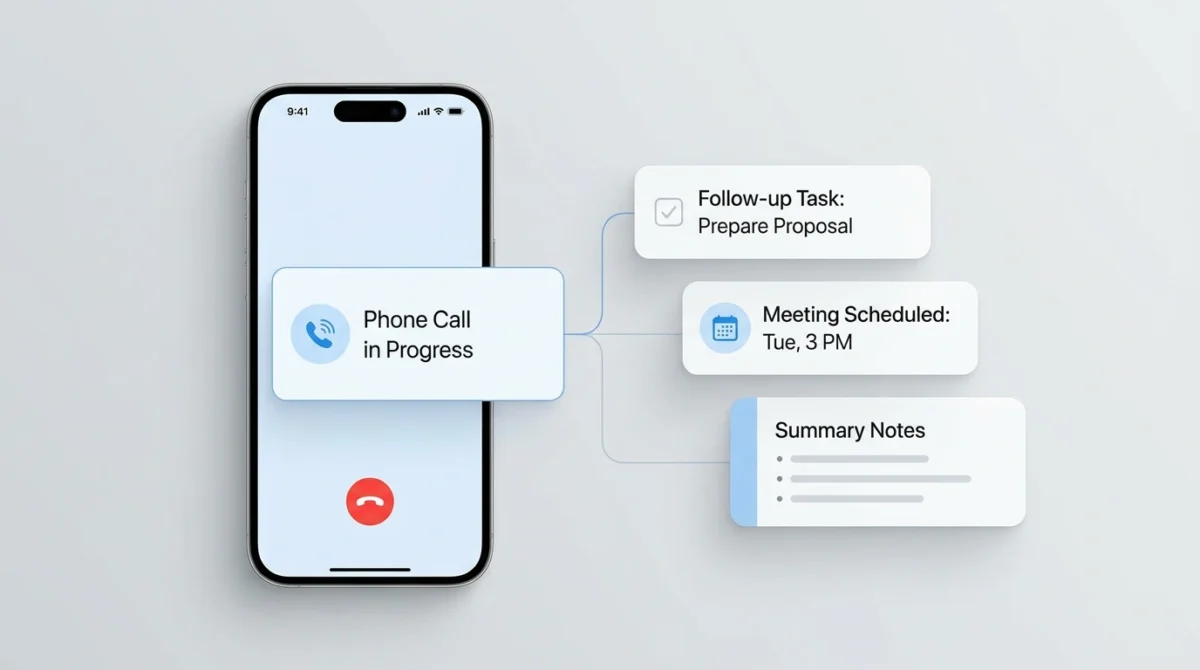
Most teams do not lose sales because of lack of talent. They lose them because every call arrives late, without context or without follow up. That is where Smart Calls stop being simple telephony and become an operational advantage.
For years, selling over the phone meant persistence, improvisation and poorly distributed human effort. Many teams still operate this way: missed calls, blind transfers, follow ups that depend on memory and conversations that go cold in silence. That model can no longer keep up with the speed of the market. Smart Calls changes that.
BIKY.ai completely redefines the concept of calls with its Smart Calls module. It is not about dialing more numbers or answering faster. It is about responding with context, scaling with criteria and turning every call into operational evidence. A call becomes a commercial layer where voice, data and intelligence work together.
The comparison is not technological. It is strategic. How does a team sell when everything depends on human effort? And how does it change when their commercial skills are supported by a call operation designed to convert?
Without Smart Calls: selling by phone depends on heroics
When a company operates calls without an intelligent layer, almost everything depends on individual habits. A lead comes in, someone answers if available, transfers if needed and promises to call back if the case is paused. Sometimes it works. Many times it does not.
This creates a false sense of normality because failures are not always visible in real time. But the cost is clear: missed calls, lost opportunities, customers repeating their story and agents working with incomplete information.
When the call operation lacks control, conversion is lost silently.
The most critical issue is that in this scenario, companies often blame the team. They say there was no follow up, poor objection handling or slow closing. Sometimes that is true, but often the real problem is not the salesperson. It is a process that cannot maintain context and discipline as lead volume grows.
Phone communication stops being an event and becomes a system with Smart Calls
That is exactly what changes with Smart Calls in BIKY.ai. A call stops being an isolated interaction and becomes part of a commercial operating system. Voice connects with teams, rules, SLA, traceability, metrics and customer data.
The practical difference is significant. It is no longer just about answering. Now the operation can:
- Route each call to the right agent based on skill, priority or availability
- Automatically register what happened during the interaction
- Transcribe and summarize the conversation
- Detect intent and objections
- Update the CDP and CRM without manual input
- Schedule callbacks and next steps without relying on memory
This means sales talent stops wasting energy on mechanics and focuses on what truly differentiates them: judgment, relationships and closing.
First comparison: an incoming call without Smart Calls
Imagine a simple case. A customer calls after seeing a campaign and wants to know availability, final price and financing options.
Without Smart Calls, the experience usually looks like this: the call enters a general line, someone answers with little context, listens briefly and transfers the call to another agent.
The second agent does not know the lead source, campaign or what was already discussed. They start from scratch. The customer repeats information, the conversation loses flow and if the issue is not resolved or the call drops, follow up depends on someone who likely has many other tasks.
That small chaos has direct consequences: lower trust, slower conversion and higher abandonment. Not because the team does not want to sell, but because the system does not protect intent.
Now the same call with Smart Calls from BIKY.ai
With BIKY.ai, the process starts before hello. Smart Chat connects numbers, teams and routing rules. The call reaches the right agent or a queue governed by SLA. Voice connects with the customer’s history and previous context, so the conversation does not start blind.
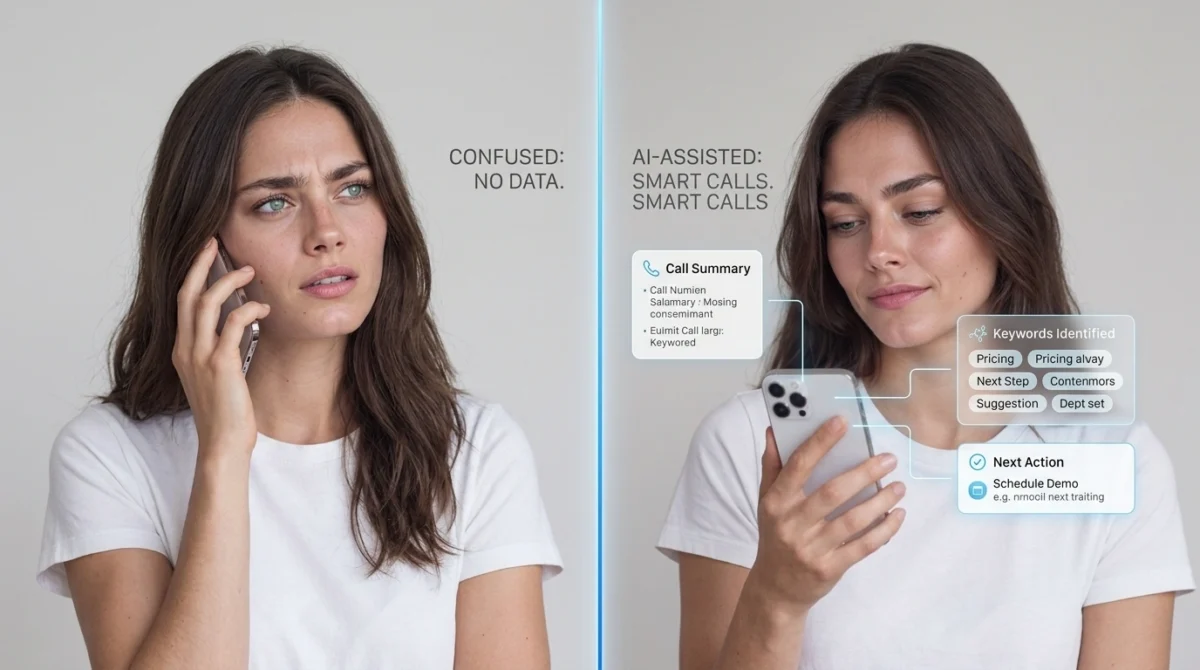
During the call, emotional AI transcribes, summarizes, detects intent and updates the CDP and CRM. If transfer is needed, the handoff includes summary, objections, intent and next steps, avoiding a restart.
The result is not just organization. It is a different commercial experience: fewer repetitions, more precision and continuity that improves both conversion and brand perception.

Second comparison: follow up after the call
This is where major leaks happen. After a call, the salesperson promises to send information, call back or resume later. Without Smart Calls, everything depends on discipline. What depends on memory eventually fails.
With Smart Calls, follow up becomes operational execution. The system includes reminders, classification, call metrics and callback logic to maintain continuity. It ensures every action is recorded and nothing is lost.
This directly impacts the pipeline. Weak follow up increases CAC because more demand must be generated to replace lost opportunities. Strong follow up converts existing demand more efficiently.
Third comparison: how the salesperson’s role changes
Without Smart Calls, a salesperson does more than sell. They take notes, remember agreements, classify outcomes, maintain brand tone, prioritize manually and rebuild context after transfers.
Much of their work is not commercial. It is logistical.
With BIKY.ai, that burden is reduced. Emotional AI handles urgent tasks, summarizes conversations, records data, detects buying signals and suggests next steps. The salesperson focuses on decisions and closing.
This shift is critical. Commercial skills are not reduced. They are amplified. With technology maintaining context, the salesperson can listen better, handle objections with precision and move deals forward with less friction.
Smart Calls is not a call center, it is a hybrid operation with real data
Smart Calls does not compete with telephony providers or traditional call centers. A telephony provider connects calls. Smart Calls orchestrates operations with rules, SLA, auto assignment, classification, metrics and direct connection to CDP and CRM.
For leadership, this is fundamental. It is not about adding another tool. It is about transforming calls into a measurable, auditable and optimizable asset.
Voice also needs qualitative metrics
Many organizations still measure calls with basic indicators: volume, average time and duration. These metrics help, but they are not enough. They do not explain intent, urgency or interaction quality.
Smart Calls from BIKY.ai adds more valuable data such as sentiment, classification, traceability, transcription, objections and next steps. This allows understanding not just how many calls come in, but what happens inside them.
Marketing can see which campaigns generate higher intent calls. Sales can detect loss patterns. Operations can adjust playbooks, queues and rules.
Calls stop being a blind channel and become a source of commercial intelligence.
True omnichannel prevents context loss
Calls rarely exist alone. A customer may come from an ad, write on WhatsApp, visit the site, call and later return through Instagram. If each channel starts from zero, continuity is lost.
Smart Calls in BIKY.ai connects calls with WhatsApp, Instagram, Messenger and webchat in a unified history. Context travels with the customer.
For the customer, this builds trust. For the company, speed. For the team, a clear advantage: speaking with full context even if it is the first voice interaction.
Economic impact: less abandonment, more stability
From a financial perspective, the difference can be summarized in operational control. When intent is lost due to delays or poor routing, the cost impacts pipeline and CAC.
With control and context, conversion increases and abandonment decreases. Fewer missed calls, better conversations, consistent follow up and stable conversion.
It is not about answering more calls. It is about converting each opportunity better.
The new way of selling through voice
Voice will remain critical, but expectations are higher. Less patience, more competition and more pressure on efficiency.
The difference will not be made by teams that call more. It will be made by teams that operate voice more intelligently.
That is where Smart Calls becomes essential. It transforms calls into a measurable, orchestrated process connected to the entire operation.
This is not about tools. It is about how commercial capability is amplified or wasted.