
The biggest enemy of your conversion comes after you say “yes”
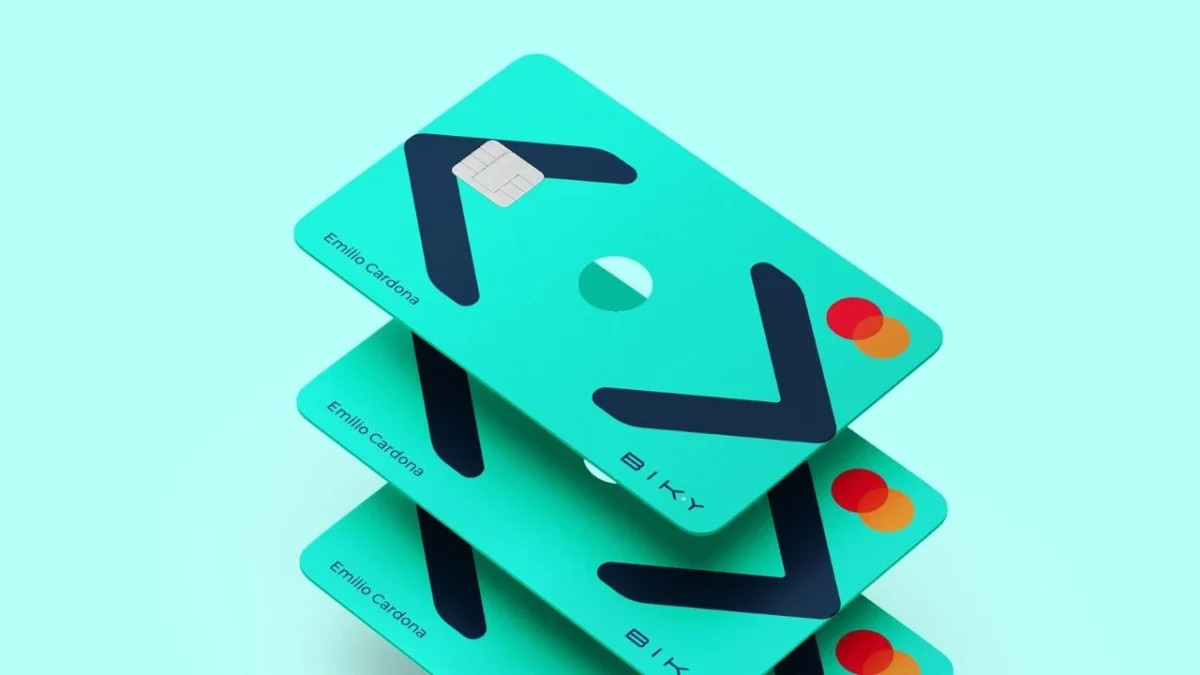
Most digital sales are not lost due to price, product, or value proposition. They are lost in the final seconds, just when the customer has decided to buy, the process is interrupted, and the decision cools off. To solve this, there is BIKY Pay.
Sales teams usually concentrate their energy on persuasion: optimizing messaging, improving arguments, training salespeople, refining offers. However, the most delicate moment of the process comes afterward.
The customer agrees, is ready to buy, the conversation flows, and then a familiar instruction appears: “I’ll send you the payment link.”
That small shift alters the entire dynamic. The experience stops being continuous, the customer leaves the context, and the decision loses momentum. What seemed like a simple action now introduces uncertainty, delay, and distraction.
The phenomenon of micro-drop-off at the moment of payment
There is a category of loss that is barely visible in traditional metrics: micro-drop-off.
It is not an explicit rejection. It is something more subtle:
- The customer postpones the payment
- The conversation pauses
- Intent fades
- The process remains unfinished
The causes are usually operational, not strategic:
- External redirections
- Disconnected processes
- Unnecessary additional steps
- Loss of the emotional context behind the decision
These interruptions progressively reduce the probability of closing, and the accumulated cost of these small drop-offs is enormous, even though it is rarely measured.
How the traditional payment model breaks the experience
The classic digital payment flow in chat works as a sequence separate from the sale:
- The customer decides to buy
- The salesperson sends instructions or a link
- The customer leaves the conversation
- The process continues in another environment
This design introduces multiple risks:
- Loss of continuity
- Decrease in emotional commitment
- External distractions
- Uncertainty about the next step
From the customer’s perspective, the process no longer feels guided. From the business perspective, intent becomes unstable.
The psychology of the decision moment
The moment when a customer decides to buy is a particular state:
- Attention is high
- Intent is clear
- Motivation is active
Any change at that moment affects the likelihood of completing the payment. When the process is interrupted:
- Urgency decreases
- New doubts arise
- The environment competes for attention
- The decision loses priority
That is why the design of the closing experience is more relevant than prior persuasion.

What it means to integrate payment into the conversation
At BIKY.ai, we propose eliminating the separation between selling and collecting payment. Conversational payments make it possible to:
- Execute the transaction without leaving the channel
- Maintain continuity in the experience
- Record the payment within the commercial flow
- Reduce unnecessary steps
Payment stops being an administrative process and becomes a natural part of the interaction.
This is where BIKY Pay comes in.
What BIKY Pay is and why it redefines commercial closing
BIKY Pay is the conversational payments module of BIKY.ai, designed to integrate payment directly within the sales flow.
Its logic is simple: if the decision happens in the conversation, the payment should too. This makes it possible to:
- Generate payment requests within the chat
- Maintain full commercial context
- Automatically record the transaction
- Connect payment with the funnel and CRM
The result is a continuous experience where intent and action happen in the same space.
Economic impact of integrated payment
Reducing micro-drop-off has direct effects on key indicators:
- Higher final conversion rate
- Shorter sales cycle
- Improved cash flow
- Lower follow-up cost
- Greater revenue predictability
From a financial perspective, eliminating interruptions at closing increases CAC efficiency and improves the performance of the entire commercial operation.
Operational continuity and internal efficiency
Conversational payment also simplifies internal processes.
Without integration:
- The salesperson manually verifies payments
- Transaction status is uncertain
- Follow-up consumes time
With BIKY Pay:
- The system records the payment automatically
- The funnel updates in real time
- Subsequent actions are triggered
The operation becomes more fluid and predictable.
The attention economy applied to closing
Customer attention is limited and volatile. Preserving it at the moment of decision is critical.
BIKY Pay responds to this reality:
- Reduces unnecessary steps
- Maintains cognitive continuity
- Eliminates external distractions
- Accelerates execution of the decision
The experience feels more natural and professional.

More accurate data, smarter decisions
Integrated payment enables more relevant metrics:
- Time from decision to payment
- Micro-drop-off rate
- Correlation between conversation and conversion
- Closing behavior by segment
These metrics allow funnel design to be optimized and predictability to improve. Closing stops being a black box.
Freeing the human team from manual follow-up
One of the biggest time drains in sales is chasing pending payments.
When the process is automated:
- Repetitive tasks disappear
- Administrative burden decreases
- Salespeople focus on generating new opportunities
With BIKY.ai AI sellers and BIKY Pay, work that does not create direct value is eliminated.
Closing as a strategic experience
Historically, payment was treated as a technical process. Today, it is a critical component of experience.
A well-designed closing:
- Transmits security
- Reinforces trust
- Maintains brand coherence
- Accelerates the decision
A poorly designed closing introduces uncertainty, and that difference directly impacts revenue, for better or worse.
The evolution of conversational commerce
Digital commerce has followed a clear trajectory:
- First, acquisition was optimized
- Then, attention was optimized
- Now, the focus is on execution
Integrating payment into the conversation is the natural evolution of this process. Companies that adopt this model will not only sell faster, they will operate with greater coherence and predictability.
Selling better is about enabling action, not just persuading
The true commercial challenge is not convincing the customer. It is enabling them to act when they decide.
BIKY Pay proves that closing design can transform business efficiency. By maintaining continuity of experience and eliminating unnecessary interruptions, payment stops being a vulnerable point in the funnel.
Open a demo account at BIKY.ai and discover this and all our modules to strengthen and scale your sales with emotional AI.