
🔋 New sustainable energy sources: converting battery acid and plastic into clean hydrogen
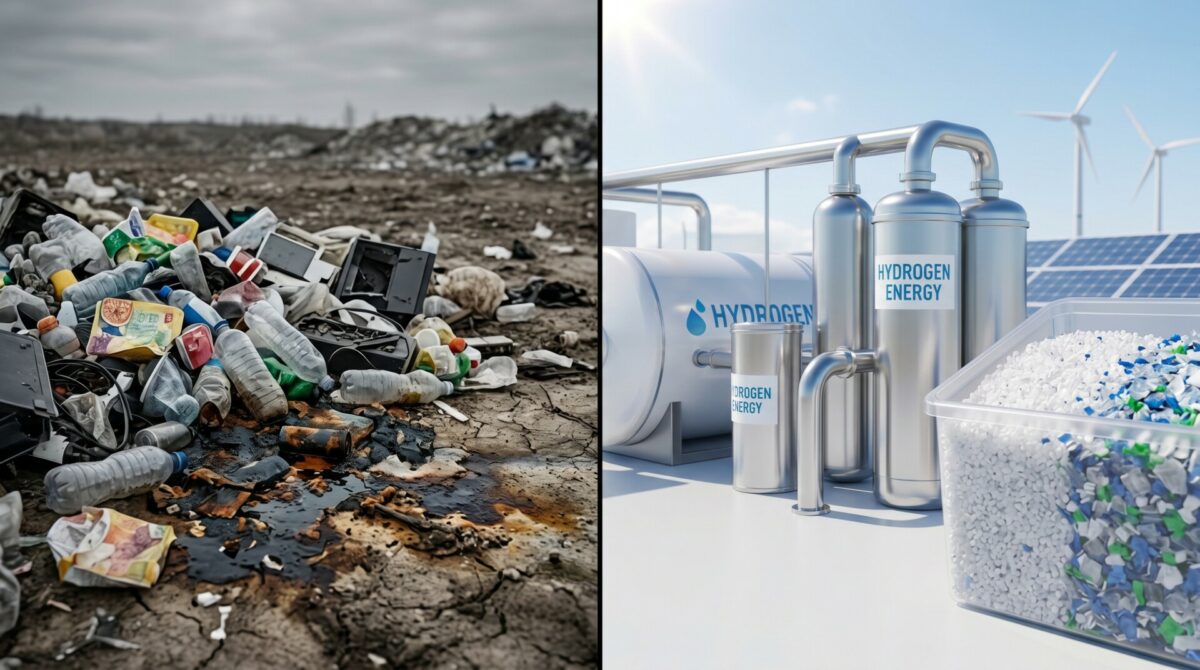
Sometimes the best solutions appear where we once saw only waste. That is exactly what this scientific breakthrough based on new sustainable energy shows.
A team of researchers at the University of Cambridge developed a solar reactor capable of transforming two major environmental problems, hard to recycle plastic and acid from used batteries, into something valuable: clean hydrogen and new industrial compounds.
Two waste streams, one solution
Every year, more than 400 million tons of plastic are produced worldwide, and a large portion ends up in landfills or polluting ecosystems. At the same time, millions of car batteries generate residual acid that is normally neutralized and discarded.
Now, thanks to this system focused on new sustainable energy, both waste streams can become useful resources.
The process uses sunlight to break down complex materials such as:
- Plastic bottles
- Nylon textiles
- Polyurethane foams
- Other waste that is difficult to recycle
And it does so using acid recovered from old batteries.
How the breakthrough works
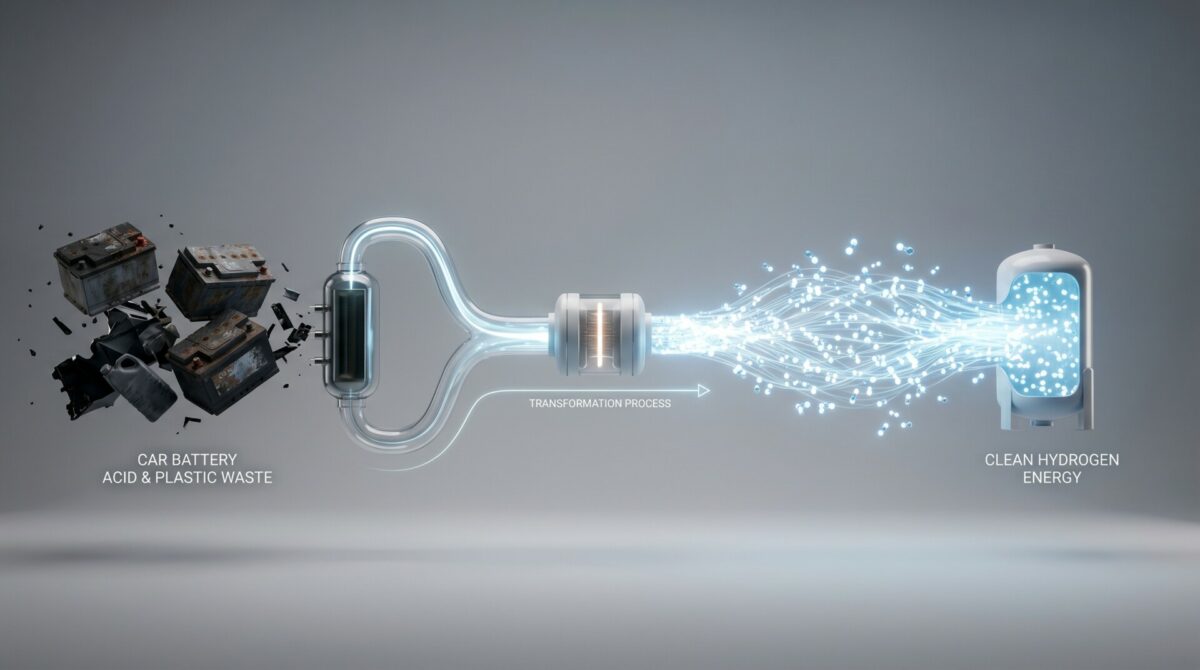
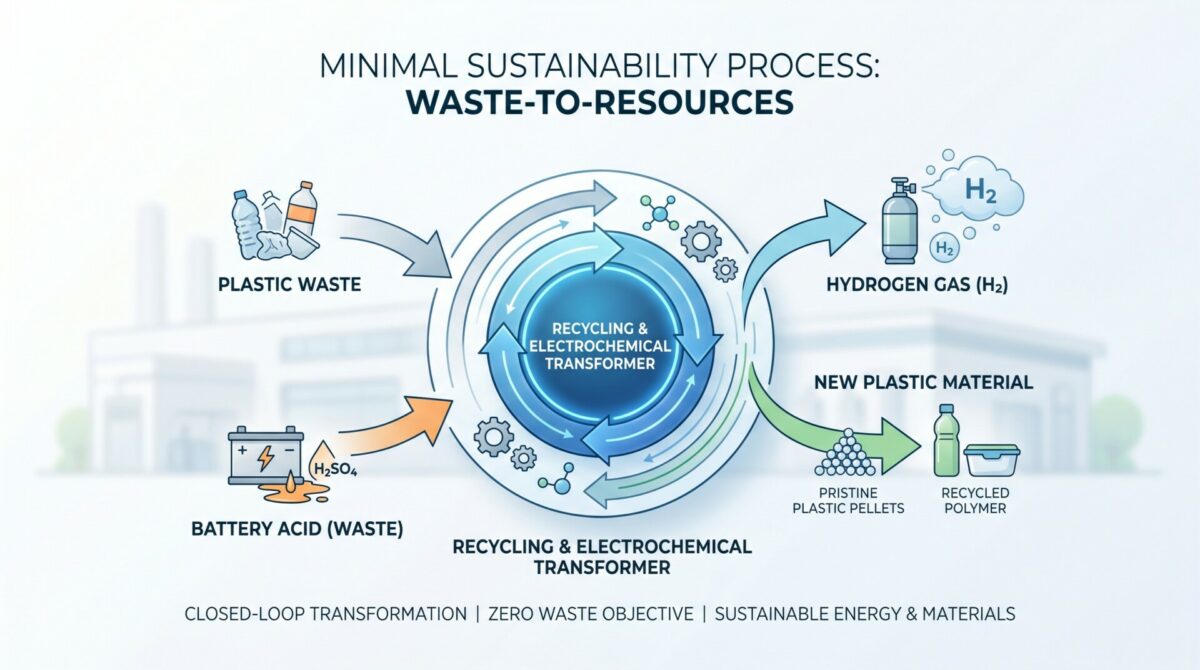
Scientists first apply the acid to plastic waste to break its chemical chains. Then, a photocatalyst activated by sunlight transforms those components into:
- Clean hydrogen
- Acetic acid, the basis of vinegar and useful for industry
This approach shows how new sustainable energy can use science to close loops and reduce waste.
Promising results
In laboratory tests, the reactor achieved:
- High levels of hydrogen production
- Strong chemical conversion efficiency
- More than 260 hours of operation without losing performance
In addition, it works with materials that are currently difficult to recycle using traditional methods. That makes this discovery a real alternative for the future of new sustainable energy.
A circular model for the planet
The most valuable part of the project is not only the technology, but the logic behind it: one type of waste helps solve another.
- Instead of extracting more resources, it uses what already exists.
- Instead of discarding, it transforms.
- Instead of polluting, it generates energy.
That is the core of new sustainable energy: intelligent systems that turn problems into opportunities.
From the lab to the real world
The team is already working to take this innovation beyond the laboratory with support from Cambridge’s technology transfer division.
Engineering challenges still remain, but the scientific foundation has already been proven. That opens the door to future facilities capable of processing real waste on a large scale.
Good news for the future
This discovery does not promise to solve every environmental problem overnight. But it does prove something powerful:
- Innovation can be practical.
- Science can create hope.
- And waste can become part of the solution.
New sustainable energy is not only being born in large infrastructure projects. It is also emerging in laboratories where someone dares to look at trash and see potential.