
AI to Anticipate Disasters: When Gaining Time Can Save Lives
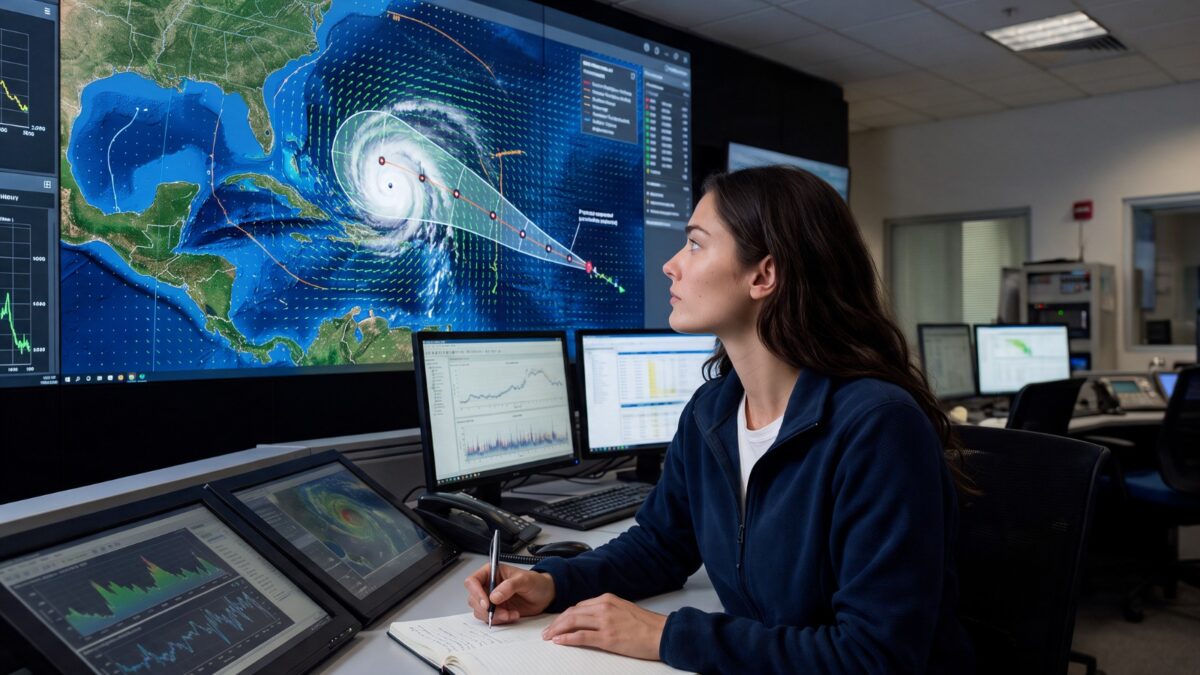
There is something that can make an enormous difference when a natural disaster is approaching: having time to prepare.
An early warning allows a family to seek shelter, a hospital to organize its resources, and emergency teams to act before the situation becomes more complicated.
That is precisely why artificial intelligence is playing an increasingly important role in risk prevention.
Thanks to its ability to analyze large amounts of meteorological, satellite, and geographic information, it is now possible to develop tools that help identify patterns and improve certain forecasts.
Although technology still cannot predict every natural disaster with complete accuracy, it is opening up new possibilities for anticipating their effects.
And that is good news: when it comes to protecting lives, every minute counts.
AI for Disaster Prediction Helps Us Better Understand the Weather
One of the recent advances in this field is WeatherNext 3, a weather model developed by Google DeepMind and Google Research.
This technology uses artificial intelligence to generate weather forecasts and improve our understanding of atmospheric phenomena.
In addition, its capabilities aim to provide more accurate information about different weather variables, including precipitation.
This is particularly relevant because predicting where and when heavy rainfall will occur remains a challenge for specialists.
Why does this matter? Because more detailed forecasts can help farmers plan their activities, transportation services prepare for adverse conditions, and authorities assess potential risks.
In this way, AI for disaster prediction becomes a complementary tool for interpreting information that would otherwise require an enormous amount of processing.
However, it is important to clarify that a weather forecast does not automatically translate into an emergency alert.
Protecting the population also requires trained professionals, response protocols, and effective communication channels.
Floods: Anticipating Risks to Protect Communities
Floods are one of the areas where artificial intelligence can provide tangible benefits. When a river’s water level rises or rainfall exceeds a city’s drainage capacity, having advance information can help reduce exposure to danger.
In this context, Google developed Flood Hub, a platform that uses artificial intelligence models to forecast riverine floods.
According to information published by the company, some of its forecasts can provide up to seven days of advance notice, depending on the location and conditions analyzed.
In addition, in 2026, Google introduced Groundsource, a methodology that uses artificial intelligence to analyze historical news reports about floods.
This allows researchers to identify events that may not have been recorded in traditional meteorological databases.
This approach is particularly interesting because not every region has enough sensors or historical records. Therefore, finding new sources of information could help expand our understanding of risks in less monitored areas.
However, having data is not enough on its own. For AI for disaster prediction to have a real impact, information must reach the right people and be translated into preventive measures.
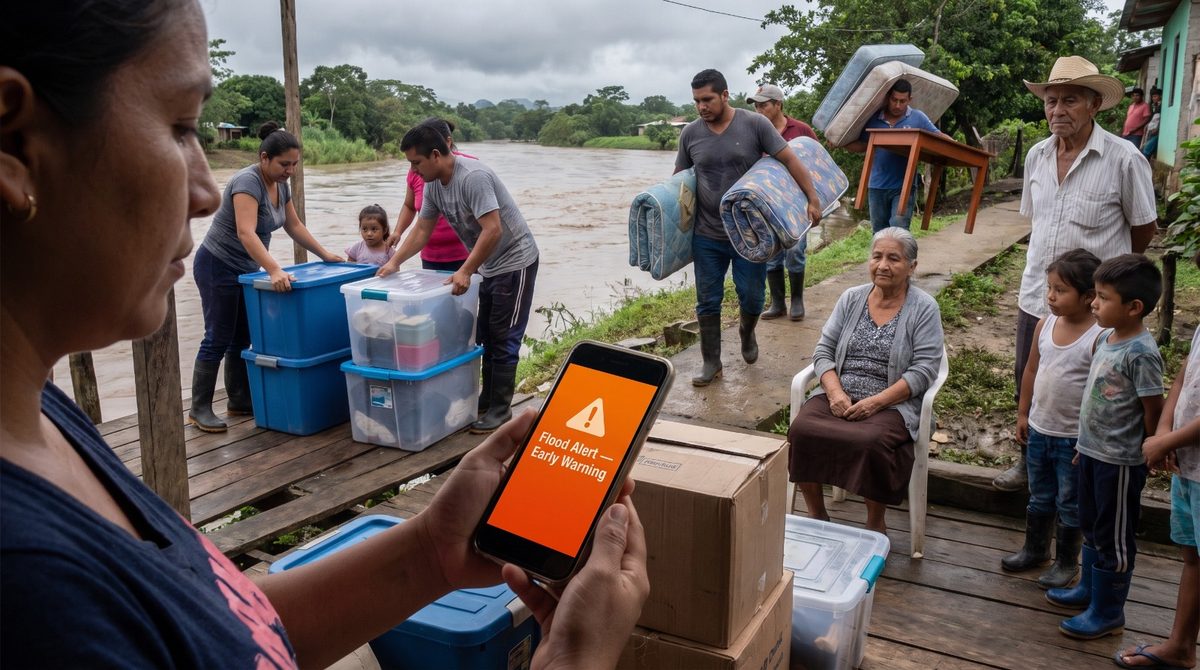
For example, a timely alert can facilitate evacuation, the protection of belongings, and the preparation of supplies.
Although every situation is different, having more time can improve communities’ ability to respond.
Artificial Intelligence Also Improves Cyclone Forecasts
Another field in which these tools are being explored is tropical cyclone tracking.
These phenomena can change in intensity and trajectory, so anticipating their development remains a complex task.
Throughout 2026, researchers and meteorological centers have continued developing artificial intelligence based systems to improve forecasts of these events. One of them is the European Centre for Medium Range Weather Forecasts (ECMWF), which has investigated methods to reduce errors in estimates of cyclone intensity.
In particular, gaining a better understanding of wind speeds and changes in intensity can help specialists assess the potential impacts of a storm.
The more useful this information is, the greater the opportunities to prepare an appropriate response.
Even so, these tools do not eliminate uncertainty. That is why their results must be evaluated alongside other models, observations, and meteorological expertise.
Ultimately, AI for disaster prediction does not replace scientific expertise. Instead, it adds new ways to analyze phenomena and support decision making.
Can AI Replace Emergency Experts?
The answer is no. Although artificial intelligence models can process information at high speed, interpreting a risk requires much more than identifying patterns.
On the one hand, specialists must consider the geographic characteristics of each region.
On the other, they need to assess the reliability of forecasts, communicate uncertainties, and determine which measures are appropriate in each situation.
Likewise, meteorological and hydrological authorities continue to play a fundamental role in issuing official alerts.
In this regard, the World Meteorological Organization promotes the responsible use of artificial intelligence to strengthen early warning systems without replacing the capabilities of national services.
Consequently, the true potential of these technologies emerges when they work alongside people: models analyze, professionals interpret, and communities receive information that enables them to act.
From BIKY.ai: Turning Information Into Action
This story reminds us of something important: having information is only the beginning. Its true value emerges when we manage to interpret it and use it to make better decisions.
In disaster prevention, this process can help identify risks and prepare a response further in advance. Similarly, in other sectors, artificial intelligence can help transform large volumes of data into useful knowledge for people.
That is why, beyond the technology being used, what matters is the purpose: ensuring that information helps people act better and on time.
Gaining Time Is Also a Way to Protect Lives
The United Nations initiative Early Warnings for All aims to ensure that everyone is protected by early warning systems against different hazards by the end of 2027.
However, significant challenges remain. Not all countries have the same infrastructure, alerts do not always reach the most vulnerable populations, and each phenomenon presents its own particular difficulties.
Despite this, advances in artificial intelligence offer new tools to strengthen prevention and expand opportunities for early action.
And that is why these developments give us reason to be hopeful. A more useful forecast can help a community prepare; an alert that arrives on time can facilitate an evacuation; and better coordination can help protect those who need it most.
AI for disaster prediction cannot prevent a storm from forming or guarantee that a flood will not occur. However, it can help us be better prepared when the time comes to act.
Because sometimes, progress does not mean preventing every risk, but learning to face them with greater knowledge, more time, and better tools.
And when that time can help protect lives, we are looking at good news.