
The mission that aims to clean up 90% of the plastic in the oceans
Sometimes the best news does not make much noise, but it changes the course of the planet.
That is exactly what The Ocean Cleanup is achieving. Founded in 2013 by the young Dutch inventor Boyan Slat, the organization set an ambitious goal that sounds enormous but becomes more real every year: to remove 90 percent of floating plastic from the oceans by 2040.
And this is not wishful thinking. It is engineering, data, constant innovation, and measurable results.
A brilliant strategy: tackling the problem from two fronts
Instead of focusing only on cleaning what is already in the ocean, the project designed a dual approach: clean and prevent at the same time.
First front: cleanup in the open ocean
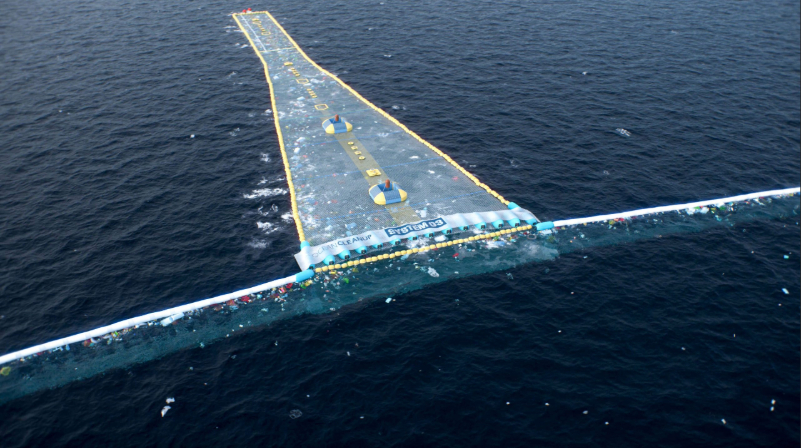
Out in the ocean, where massive amounts of waste accumulate in places like the Great Pacific Garbage Patch, they use floating systems such as System 03.
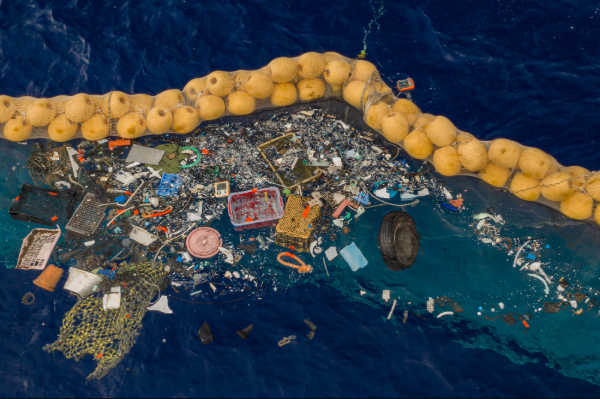
This system is a U-shaped barrier more than two kilometers long that moves slowly through the water, guided by vessels. Its design uses ocean currents to concentrate plastic and collect it without harming marine life.
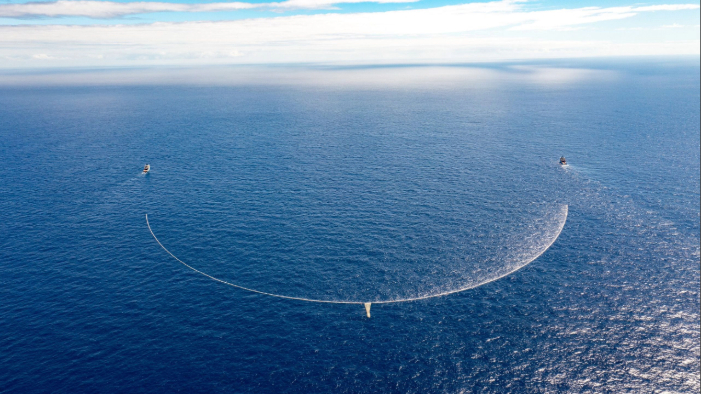
It is as if the ocean finally has a smart net designed specifically to recover what humans have left behind.
Second front: cleaning rivers before the problem reaches the ocean
Here is one of the project’s most powerful ideas: stopping plastic before it ever reaches the sea.
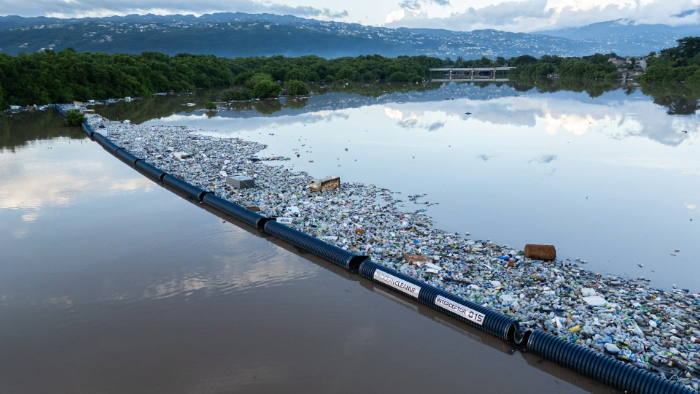
To do this, they created the Interceptors, autonomous, solar-powered barges installed in some of the most polluted rivers in the world. These machines continuously capture floating waste, preventing tons of plastic from flowing into the ocean.
This is prevention at scale, using clean technology to stop pollution at its source.
Results that inspire hope, and they are not small
EThis is not a symbolic project. It has achieved:
- More than 50 million kilograms of plastic removed from rivers and oceans.
- In 2025 alone, 25 million kilograms were collected, showing that the technology is becoming more efficient every year.
- The systems are designed to protect marine life: fish can escape beneath the barriers, and newer versions include cameras and remotely controlled escape hatches.
Every technical improvement means more plastic out of the water and less impact on ecosystems.
A story about what we are doing right
At a time when the environmental crisis can feel overwhelming, this story shifts the narrative.
A young person with an idea.
Engineering applied to a global problem.
Technology working with nature, not against it.
Measurable results, year after year.
The Ocean Cleanup shows that innovation is not only about faster apps or brighter screens. It can also be used to repair the planet.
And it reminds us of something important: we still have time to build massive solutions, if we think big and act intelligently.
Good news for the oceans.
Good news for technology.
Good news for everyone. 🌎💙