
Payments are now a key operational lever within the sales funnel

Digital conversational payments with BIKY.ai are making payment an active part of the transaction.
For years, payment was treated as an isolated moment within the sales process.
The customer moved through the funnel, made a decision, and eventually reached a checkout. There, they completed the transaction and the process ended from an operational standpoint.
This model worked for a time, but today it shows clear limitations.
Every time the customer leaves the conversation to go to a separate payment environment, an interruption appears. The company loses context, visibility, and in some cases, the sale itself.
In this scenario, digital conversational payments emerge as a necessary evolution. By integrating payment into the conversation, the company maintains control of the process and turns each transaction into an operational signal.
Digital conversational payments do not just enable collection. They enable the business to operate with greater precision.
Classic checkout vs payment within the conversation
Traditional checkout is designed to standardize transactions.
It works well in quick purchase scenarios where the customer already has all the information and only needs to complete payment. However, this model has limitations in more complex or assisted sales.
When the customer needs to clarify doubts, compare options, or negotiate terms, traditional checkout becomes insufficient.
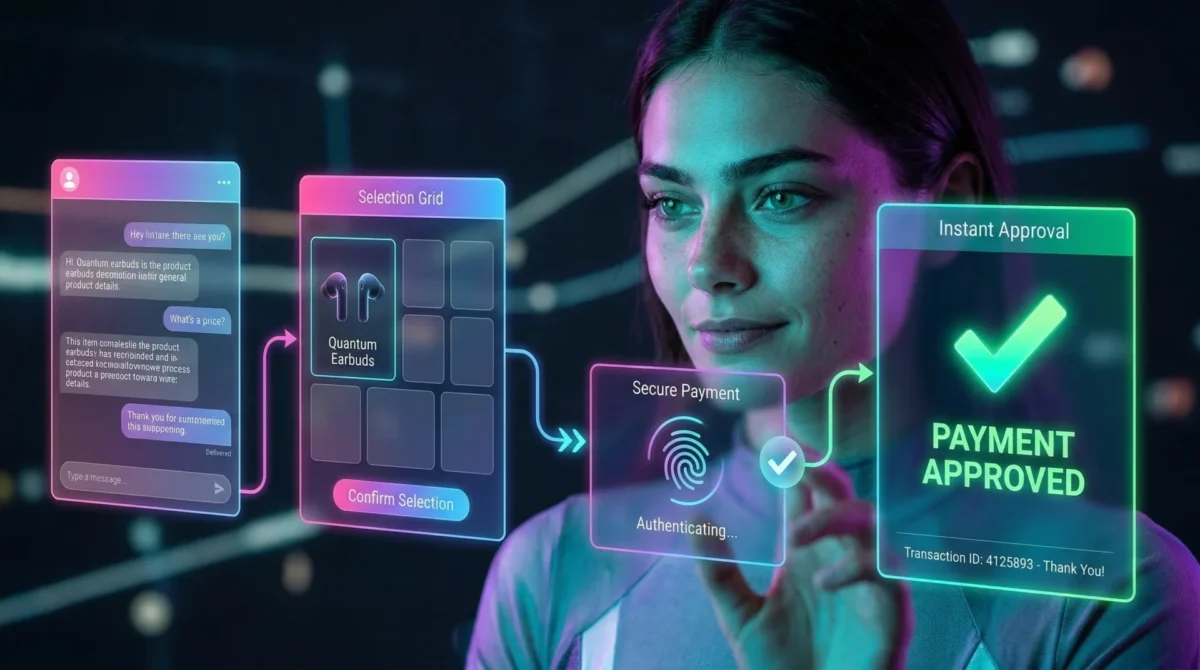
In these cases, digital conversational payments offer a more efficient alternative. Payment happens within the same flow where the decision was built. There is no change of environment and no loss of context.
This allows companies to close deals at the exact moment the customer is ready to decide.
Payment as a signal within the funnel
In most organizations, payment is recorded as a final event.
However, from a strategic perspective, payment is one of the most important signals in the customer lifecycle. It triggers new actions.
For example, once payment is confirmed, the system can:
- Automatically update the opportunity status
- Activate onboarding processes
- Generate tasks for the sales team
- Trigger retention or repurchase strategies
This approach transforms payment into a connection point across different areas of the business. Payment stops being the end of the process and becomes a node within the entire operation.
Reducing losses from operational disconnection
One of the most common problems in sales processes is losing opportunities after the customer shows payment intent.
The customer requests information, receives a proposal, and at some point is sent an external payment link. At that moment, the company loses visibility over what happens next.
If the customer does not complete the payment, the sales team must follow up manually.
Digital conversational payments solve this by keeping everything within the same flow.
The system can detect whether the payment was completed, is pending, or was abandoned. It can also trigger automatic reminders or specific actions based on the transaction status.
This reduces reliance on manual follow up and improves closing rates.
Traceability and real time control
Another key aspect of digital conversational payments is operational visibility.
Each transaction is recorded within the context of the opportunity, the conversation, and the customer.
This allows teams to access clear information such as:
- Payment status
- Opportunity owner
- Interaction history
- Agreed conditions
This level of traceability improves decision making.
Leaders can identify bottlenecks, analyze closing times, and detect improvement opportunities.
When companies implement digital conversational payments, payment stops being an isolated event and becomes an integrated part of the commercial system.
Customer lifecycle automation
The impact of digital conversational payments does not end with the transaction. When payment is connected to the rest of the operation, it becomes possible to automate actions across the customer lifecycle.
For example, a confirmed payment can trigger loyalty campaigns, product recommendations, or renewal processes.
This allows the company to maintain the relationship after the purchase.
Each transaction also becomes a data source that feeds future decisions. Companies using digital conversational payments can build growth loops based on real behavior.

Margin protection and risk management
The payment process also involves operational risks. Refunds, disputes, and transaction errors can directly affect profitability.
Digital conversational payments help manage these risks more efficiently because each transaction is backed by evidence from the conversation, agreed conditions, and executed actions.
This simplifies dispute resolution and protects margins.
Additionally, business rules can be applied automatically to control refunds, validate conditions, or restrict certain operations.
For this reason, digital conversational payments not only improve conversion. They also strengthen risk management.
Discover BIKY PAY
Integrating payments into conversations would not be possible without artificial intelligence, and not just any kind.
Modern systems can interpret purchase intent, generate payment requests, and confirm transaction status in real time.
But that is not all you need. In the AI powered sales platform BIKY.ai, digital conversational payments connect with Smart Chat, CDP, and CRM to maintain context at all times.
This allows each payment to trigger automatic actions within the funnel. For example, a confirmed transaction can move an opportunity forward, while a pending payment can trigger automatic follow up.
This level of integration enables more precise business operations and is made possible by the BIKY PAY module, which converts intent into transaction without breaking the continuity of the chat.
A new way to collect payments
Payment has always been a fundamental part of the commercial process. However, treating it as an isolated event limits its strategic impact.
Digital conversational payments represent an evolution toward a more integrated and efficient model.
By incorporating payment into the conversation, companies maintain control of the process, improve the customer experience, and gain valuable data for decision making.
This approach enables faster deal closure, reduces losses, and optimizes the customer lifecycle.
In BIKY.ai, digital conversational payments become a key component of the commercial operating system, connecting each transaction with the rest of the business.
In the end, collecting payment is not the final goal. It is the point where the company can begin operating with greater intelligence and scale its sales strategically.