
Modernizing payment methods is no longer a luxury, it’s essential for improving sales
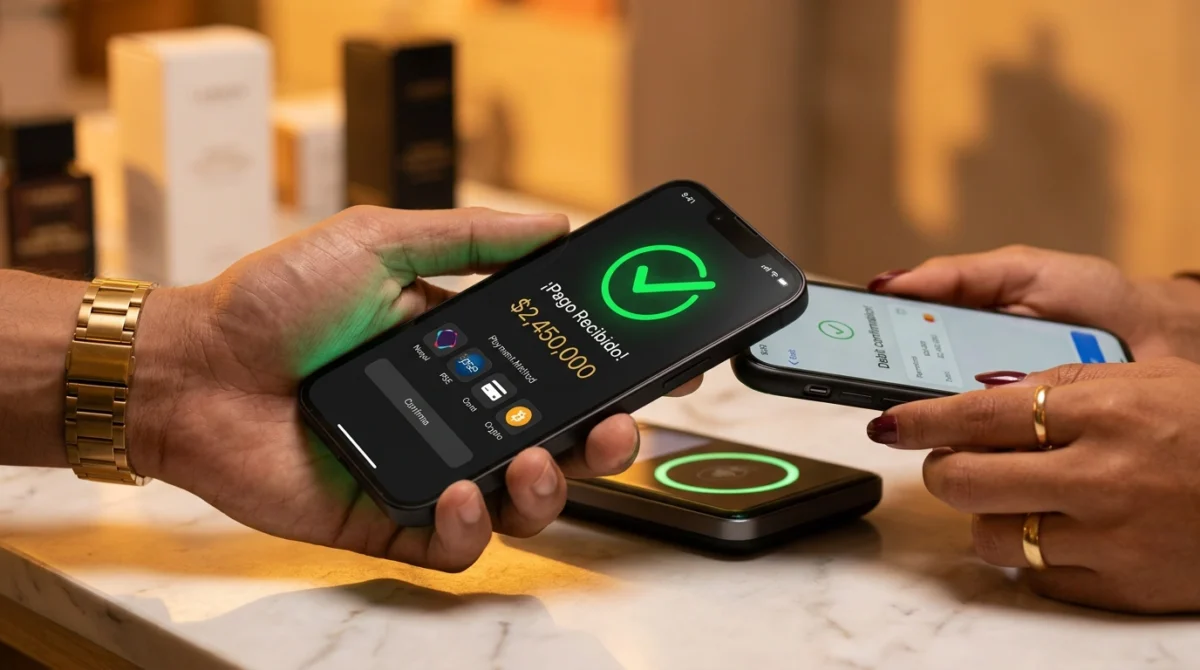
You can spend thousands on ads, automate tracking, and respond in seconds. But if the checkout process is still slow, manual, or confusing, the sale falls through.
For years, companies believed that transforming digital sales simply meant attracting more leads or responding faster. However, there is one critical area that continues to operate as it did ten years ago because modernizing payments has never been a priority.
That is where many operations lose conversions without even realizing it. You can have an excellent salesperson, an efficient campaign, or even Artificial Intelligence serving customers 24/7. But if, at the moment of payment, the customer has to leave the flow, request account details, send proof of payment, or wait for manual validation, intent begins to cool.
Modernizing payments means understanding something fundamental: payment is also part of the customer experience. And in an environment where the attention economy becomes more aggressive every day, any friction can destroy a sale that was practically closed.
That is why solutions like BIKY Pay are becoming increasingly relevant. Not because they make payments look better, but because they turn payment into an active part of the commercial operation.
The real problem is not collecting payment: it is losing the exact moment of intent
Most companies still separate sales and payments as if they were different processes.
The problem is that customers do not see it that way. They experience a single journey, and when that experience is interrupted, abandonment appears.
It happens every day:
- A customer asks a question on WhatsApp.
- They receive information.
- They become interested.
- They want to buy.
And then they hear: “I’ll send you the details,” “Make a transfer,” “Send me the receipt,” or “We’ll validate it shortly.”
That small change destroys the natural rhythm of the conversation.
In digital sales, timing matters more than ever because competitors are only one click away and attention lasts only seconds.
Modernizing payments means reducing that invisible friction that rarely appears in traditional reports.

Modernizing payments also means modernizing the customer experience
Many companies still think of payment as nothing more than a financial transaction.
In reality, it is an emotional moment where customers need clarity, trust, and continuity.
When someone buys through WhatsApp or through a digital conversation, they expect to complete the process without changing their mental environment. They want a fast resolution, a sense of security, and confirmation that they made the right decision.
That is why BIKY.ai integrates BIKY Pay as part of the complete conversational flow.
Payment stops being a separate process and becomes a natural extension of the sales conversation. That completely changes the operational dynamic.
The cost of not modernizing payments
Many companies underestimate how much money they lose through manual payment processes.
We are not only talking about abandoned sales. We are also talking about:
- Wasted operational time
- Slow reconciliations
- Human errors
- Payments without references
- Unnecessary follow-ups
- Confused customers
- Sales teams trapped chasing receipts
And most importantly: loss of traceability.
When payment happens outside the commercial system, the funnel becomes incomplete.
Marketing does not know which campaigns actually generate revenue, sales does not know which opportunities paid, finance works disconnected from operations, and leadership makes decisions based on incomplete information.
That is where technology stops being a convenience and becomes strategic infrastructure.
Modernizing payments means connecting conversation, sales, and operations
One of BIKY Pay’s biggest differentiators is that it does not function as a simple payment gateway.
It operates as a transactional layer connected to the CRM, the CDP, and the conversation itself. That enables something many companies still struggle to achieve: closing the complete customer loop from the first message to confirmed payment.
And that changes the quality of commercial decisions because you are no longer optimizing for clicks or submitted forms.
Optimizing for real revenue requires understanding:
- Which conversation converted
- Which salesperson closed the deal
- Which channel generates effective payments
- Which campaigns attract higher-intent customers
- Which cohorts repurchase faster
Without traceability, all of that becomes intuition.
With traceability, it becomes strategy.
Traditional checkout no longer fits the way people buy
Many payment experiences were designed for the internet of a decade ago.
- Endless forms
- Confusing screens
- Unnecessary redirects
- Processes designed for internal systems rather than people
The problem is that sales now happen inside conversations.
WhatsApp is no longer just a support channel. It is acquisition, service, follow-up, and closing.
That is why BIKY Pay allows payment requests to be generated directly within the conversation thread.
Customers do not feel they are leaving the process. They feel continuity.
And that continuity reduces abandonment.
Fast payments do not mean pressuring customers
There is a common misconception in digital sales.
Many brands believe that accelerating payments means becoming more aggressive.
In reality, the opposite is true.
When the process is clear, contextual, and simple, customers make decisions with less stress.
- Friction creates anxiety.
- Clarity creates trust.
That is why conversational payments work so well. They respect the natural rhythm of decision-making.
Customers understand:
- What they are paying for
- Why they are paying for it
- How much it costs
- What happens next
Without being chased, without breaking the conversation, and without being forced to repeat information.
Modernizing payments also reduces operational costs
Many companies believe payment automation only impacts conversion.
In reality, the operational impact is often even greater.
Think about a typical sales team. Hours can be lost:
- Validating transfers
- Sending links manually
- Checking payment statuses
- Confirming payments
- Updating the CRM
- Confirming deliveries
All of that consumes valuable human energy on repetitive tasks.
BIKY.ai automates much of that process.
When a payment status changes:
- The opportunity is updated
- The next step is triggered
- Follow-up is activated
- Traceability is recorded
- Automated actions are executed
That frees up time to sell more effectively.
And this is where one of the greatest advantages of BIKY.ai’s emotional AI appears: it enhances human judgment while freeing salespeople from repetitive operational work.
Traceability changes how sales organizations are managed
One of the biggest challenges in commercial operations is the disconnect between departments.
- Marketing talks about leads.
- Sales talks about closed deals.
- Finance talks about collections.
- And every team works with different metrics.
BIKY Pay helps connect those layers by linking conversations directly to:
- Opportunities
- Payments
- Deliveries
- Refunds
- Repurchases
- Customer lifecycle data
That enables a much deeper understanding of the business.
Not only quantitatively, but also qualitatively.
Because companies can analyze:
- Intent
- Friction
- Timing
- Context
- Behavior
And that leads to much smarter decisions.
Stripe and Mercado Pago should no longer live outside the funnel
Many companies already use Stripe or Mercado Pago.
The problem is not the processor itself. The problem is operational integration.
In many organizations:
- The CRM does not communicate with payments
- Payments do not communicate with customer service
- Customer service does not communicate with marketing
BIKY.ai unifies that layer through a connected conversational architecture that enables local and global payments through a single commercial logic.
And as the business scales, that consistency becomes critical.
Because growth without operational control tends to multiply invisible mistakes.
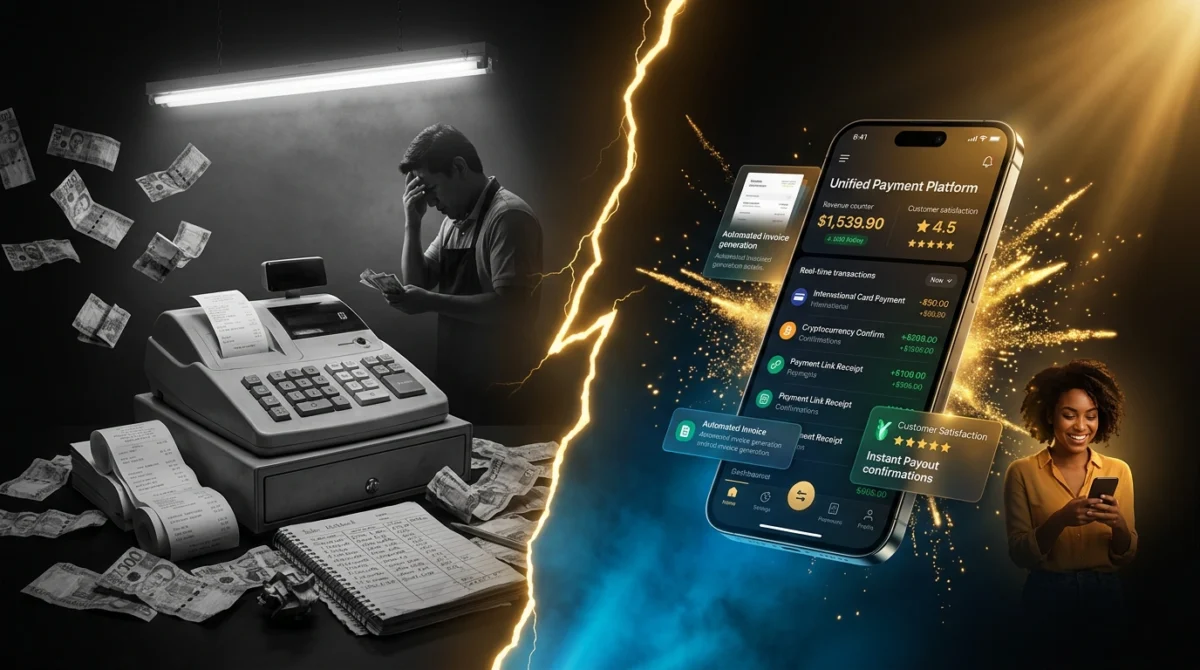
Modernizing payments is a cultural decision, not just a technological one
Real digital transformation does not happen when you buy software.
It happens when you change the way you operate with that software.
And one of the clearest signs of commercial maturity is understanding that payment is part of the customer experience.
Many companies have already modernized:
- Ads
- Automation
- CRM
- Analytics
- Omnichannel customer service
But they still collect payments the same way they did years ago.
And that creates a major operational contradiction because you cannot claim to offer a modern experience if the customer’s most sensitive moment remains manual, slow, and disconnected.
The future of sales does not separate conversation and transaction
The most efficient commercial operations have already understood something important: The sale does not end when the customer says, “I’m interested.”
It ends when they:
- Pay
- Receive
- Return
- Recommend
- Stay loyal
That is why modern platforms are beginning to integrate conversation, automation, identity, analytics, and payments into a single ecosystem.
BIKY.ai builds exactly that kind of operation where:
- Human salespeople contribute judgment
- AI sales agents maintain continuity
- Data creates context
- Payments become a natural part of the commercial flow
Modernizing payments is no longer a conversation reserved for finance departments.
It is a conversation about conversion, experience, traceability, and operational efficiency.
The real challenge is not simply attracting customers. It is building operations where every interaction naturally advances to the next step, not just because payments are automated, but because payments become operational intelligence connected to the entire commercial experience.