
Smart Calls: your best salesperson is already on the phone (and it’s AI)
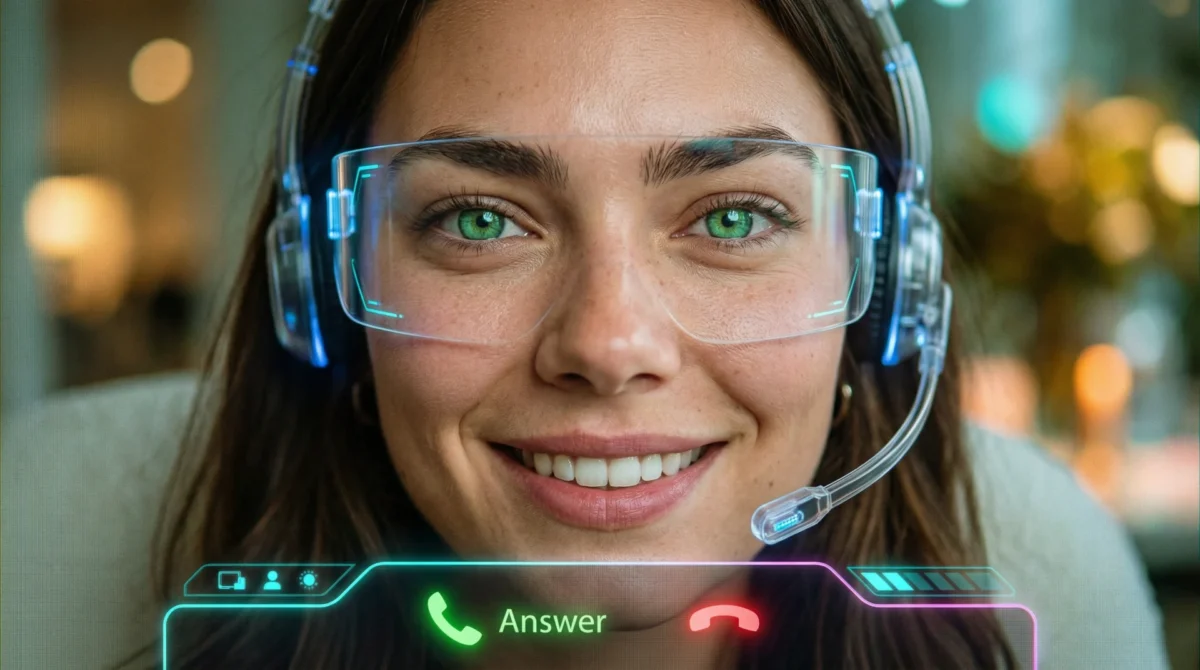
The telephone never disappeared. While the digital world filled up with chats and forms, the most important decisions continued to be made over the phone. The difference is that today’s expectations are different: speed, clarity, context, and immediate follow-up. In this scenario, relying solely on the human ear is no longer enough.
Even in an era of massive digital communication, phone calls remain the point where complex decisions are made. Negotiations, objections, final clarifications. It is the channel where customers look for certainty.
However, most companies still manage calls under a legacy model:
- Salespeople taking notes manually
- Information getting lost
- Follow-up depending on memory
- Lack of real-time visibility
The call becomes an isolated event, difficult to measure and even harder to optimize.
The problem is not the channel. It is the lack of operational intelligence around it.
What Smart Calls is and why it redefines voice-based sales
Smart Calls is not simply an automated calling system. It is a voice intelligence layer that:
- Listens in real time
- Analyzes intent and emotional signals
- Structures information automatically
- Connects the call with the funnel and CRM
- Executes follow-up actions seamlessly
Within the ecosystem of BIKY.ai, Smart Calls operates as an emotional AI seller capable of working 24/7, or as a copilot for human teams during critical conversations.
It is not about replacing the human voice. It is about enhancing it.
Before and after: traditional calls vs intelligent calls
Before, a salesperson answers the call. They take quick notes. They try to remember key details. Later, if they have time, they update the CRM and manually decide the next step.
Common outcomes:
- Incomplete information
- Inconsistent follow-up
- Low traceability
- Opportunities that cool off
Now, with the introduction of Smart Calls by BIKY.ai, the AI seller listens to the conversation. It detects intent, summarizes key points, logs data automatically, and activates follow-up workflows. The human salesperson focuses on persuading and closing.
The operational impact is immediate:
- Less administrative burden
- Faster execution
- Higher data quality
- Evidence-based decisions
AI sellers as commercial copilots
One of the most relevant concepts in this evolution is that of a copilot.
Instead of replacing the salesperson, an AI seller:
- Organizes information
- Identifies opportunities
- Suggests next steps
- Flags risks
- Maintains alignment with the funnel
This frees the human team from repetitive tasks and reduces errors caused by fatigue or multitasking.
The salesperson no longer splits attention between listening and logging. They can concentrate on what truly drives sales: understanding, negotiating, and building trust.

The attention economy applied to voice
In today’s economy, every minute of conversation matters. A longer call is not necessarily better. A structured call is.
Smart Calls enables companies to:
- Detect critical silences
- Identify recurring objections
- Measure effective talk time
- Correlate tone and intent with outcomes
This transforms the call into a source of intelligence, not just a communication channel.
From a strategic perspective, the company stops relying on subjective impressions and begins operating with concrete metrics.
Orchestration: when the call does not end at hang-up
One of the biggest gaps in the traditional model is what happens after the call.
Without an integrated system:
- Follow-up depends on the salesperson
- Reminders are forgotten
- The customer loses continuity
With Smart Calls integrated into BIKY.ai:
- The call is automatically connected to the CRM
- Follow-up workflows are triggered
- Confirmations or documents are sent
- Next steps are scheduled
The call stops being an isolated point and becomes an organic part of the sales system.
Economic and operational impact
From a financial standpoint, implementing intelligence in calls impacts:
- Reduction of administrative time per salesperson
- Increase in effective follow-up rates
- Improvement in pipeline quality
- Greater forecast predictability
It also improves key metrics such as:
- Average response time
- Close rate per call
- Effective conversation duration
- Conversion by segment
This is not a cosmetic change. It is structural optimization.
Freeing humans to do what they do best
There is a common concern that AI may dehumanize the experience.
The reality is different. AI sellers remove operational friction.
When salespeople no longer need to:
- Write while listening
- Remember details afterward
- Manually update systems
They can devote their energy to connecting with the customer.
Technology does not cool the relationship. It protects it from avoidable human error.
The natural evolution of phone sales
The phone did not disappear. It evolved.
First it was direct contact.
Then it became support.
Now it is structured intelligence.
Companies that adopt voice AI are not replacing salespeople. They are designing systems where every conversation contributes data, context, and immediate action.
In competitive markets, that difference is strategic.
Selling better is not about talking more, it is about executing better
Smart Calls proves that a call can be far more than an exchange of words. It can be an execution engine.
With the BIKY.ai approach, AI:
- Listens precisely
- Organizes information
- Activates processes
- Maintains operational coherence
Meanwhile, humans do what no machine can fully replicate: interpret nuance, build trust, and close complex deals.
The future of voice sales is not about choosing between humans or AI. It is about designing operations where both collaborate.
And in that scenario, your best AI seller does not replace the team. It empowers it in every call.