
When Effort Is Recognized, Performance Changes

A team does not only need to know what it needs to achieve.
It also needs to know which behaviors are worth repeating.
And that is where recognizing performance effectively can change the way a sales operation works.
The Problem Is Not Having Incentives. It Is Not Knowing What They Are Incentivizing
Many companies have some form of reward system for their sales teams.
Sales bonuses. Monthly prizes. Contests. Internal recognition. Benefits for those who achieve certain results.
On paper, everything seems simple.
The problem appears when the incentive is not connected to what is actually happening in the operation.
If a company rewards volume alone, it may end up driving volume.
If it rewards closing alone, it may overlook behaviors that help achieve it.
And if recognition depends on a leader’s perception, the conversation can end with a difficult question to answer:
Why did this person receive the recognition and not someone else?
BIKY.ai Rewards addresses precisely this problem: when incentives are disconnected from the funnel, they can end up rewarding activity instead of results or quality, creating bias and making it difficult for leadership to audit their impact.
The problem, then, is not how much is rewarded.
It is what behavior the system is teaching people to repeat.
Traditional Incentives Look at the Result. The Operation Needs to Look at the Process
A sale does not appear out of nowhere.
Before the close, there are conversations, responses, follow ups, stage progression, appointments, and decisions.
Some of these events may seem small when viewed in isolation.
However, together they build the result.
That is why a sales operation can have salespeople who close, but it can also have salespeople who do the things that make closing possible.
- Response speed.
- Follow up discipline.
- Conversation quality.
- Empathy with the customer.
- Correct opportunity progression.
- Complete documentation.
Rewards starts from this logic: Incentive Points, or BIKY Coins, can be assigned based on verifiable signals from the funnel and conversations, according to the commercial practices the company decides to promote.
This changes the unit of recognition.
It is no longer only “made a sale.”
It can also be “did what we want to happen again.”
When There Is No Clear Connection, Incentives Can Work Against You
A rewards system has a powerful characteristic: it changes attention.
People naturally pay more attention to what they know will be observed and recognized.
That is why, when a company rewards a specific metric, that metric begins to gain relevance within the team.
This can be positive.
But it can also generate unintended effects.
- If contacts are rewarded, activity without intent may appear.
- If appointments are rewarded, the number of appointments may increase without improving their quality.
- If only closing is rewarded, the customer experience or the quality of the process may be overlooked.
And if the rules are unclear, another problem appears: the team learns to optimize the system instead of improving the operation.
The architecture of Rewards itself includes traceability and anti gaming to reduce this risk. Each point must be supported by evidence from the process, and guardrails are in place to detect anomalous patterns.
The goal is not to reward more activity.
It is to reward better.
AI Changes the Way Performance Is Recognized
Here, an important difference emerges compared with traditional programs.
A leader can recognize someone they know well.
But when there are hundreds of salespeople, multiple teams, branches, shifts, and thousands of interactions, manually reviewing every behavior is no longer viable.
AI makes it possible to take this logic to another scale.
Rewards can take verifiable events from the funnel and conversational operation and turn them into points without relying on a manual review for every case.
This allows recognition to happen closer to the moment when the action takes place.
And that proximity matters.
Because when a person receives a clear signal that an action had value, the relationship between behavior and recognition becomes more evident.
- I did something well.
- It was recognized.
- It is worth repeating.
Recognition Does Not Mean Rewarding Every Effort
Here is one of the most important points about Rewards.
Not every effort creates the same value.
A person can work many hours and still fail to move an opportunity forward.
Another person may spend less time on an interaction but resolve it with speed, empathy, and precision.
That is why the system should not simply reward “working more.”
It should recognize behaviors that make sense within each company’s sales model.
Rewards allows companies to define which behaviors are rewarded according to the sales playbook: speed, discipline, progression, quality, and closing.
This allows each organization to translate its sales strategy into operational rules.
The company decides what matters.
Technology helps measure it.
The salesperson can see how their execution translates into recognition.
From Leader Perception to Visible Rules
Another common problem arises when recognition depends exclusively on the manager’s judgment.
A leader may know their team and have good intentions.
But human perception is not always enough to build a scalable system.
Additionally, when the rules are not visible, comparisons, complaints, or a sense of favoritism may arise.
Rewards proposes a different approach.
- Each point has a reason.
- Each user has a wallet.
- Each accumulation can be traced.
And the rules can be defined consistently according to role, team, or context.
This does not eliminate human judgment.
It places it where it adds the most value.
The leader decides which behavior the organization should encourage.
The system takes care of applying the logic consistently.
Recognizing on Time Also Drives Performance
There is another difference between a traditional incentive and a system connected to the operation.
Timing.
A reward delivered weeks later may recognize a result.
But recognition that happens close to the behavior can reinforce it.
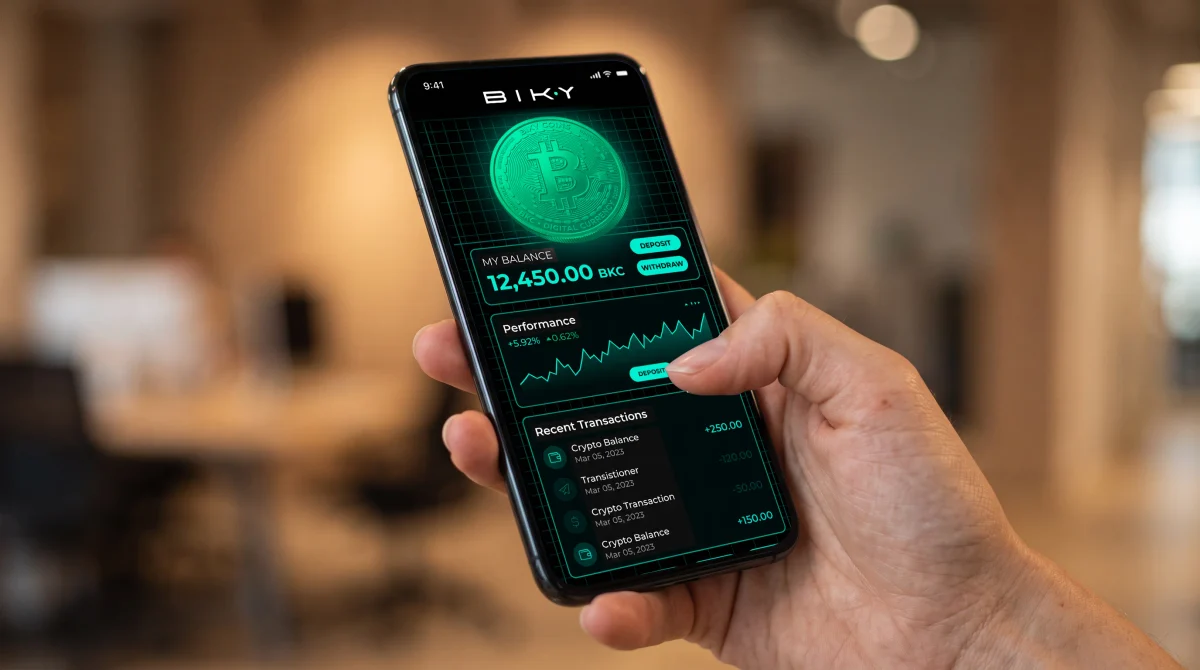
Rewards includes a personal wallet with a live balance, history, and visibility into how each point was earned. It also includes notifications when points are credited.
This makes daily performance visible.
- The salesperson does not have to wait until the end of the month to find out whether their work was valued.
- They can track progress.
- They can understand which actions generated recognition.
- And they can connect their execution to a concrete reward.

The Incentive System Also Needs a Learning System
A company should not design an incentive program and leave it unchanged for years.
The behaviors it needs to encourage can change.
- A stage of the funnel can become a bottleneck.
- A new strategy may require greater speed.
- A particular season may require reactivation.
- A team may need to regain follow up discipline.
That is why Rewards includes Challenges, which make it possible to create challenges by team, region, or shift with short, measurable, and repeatable goals.
The value is not in running contests.
It is in being able to change the operational focus without redesigning the entire program.
Today, the focus can be follow up.
Tomorrow, speed.
After that, quality.
The system adapts to the business priorities.
The Reward Has to Be Real for the Person Receiving It
The recognition loses its impact when it ends with symbolic praise that does not translate into anything tangible.
That is why Rewards completes the cycle with a Marketplace Redemption layer.
BIKY Coins can be redeemed for products, services, trips, and experiences.
This introduces an important difference.
The company defines which behaviors it wants to recognize.
The system turns those behaviors into points.
And the person can transform those points into a tangible reward.
The effort is no longer invisible.
It has a concrete representation within the operation.
Leadership Also Needs to Know Whether the Incentive Works
A rewards program has a budget.
That is why the question should not end with:
“Is the team motivated?”
Leadership needs to know something more.
“What is changing because of the program?”
Rewards includes a Budget & ROI layer to control spending by team, branch, or campaign and relate it to commercial objectives such as conversion, speed to appointment, follow up, and closing.
This changes the conversation.
The incentive is no longer simply a budget allocated to rewards.
It can be analyzed as a tool intended to influence specific sales behaviors.
And like any business tool, it should be measurable.
From an Isolated Reward to a Behavior System
The difference between a traditional incentive and Rewards can be summarized in two models.
Traditional model:
Result → reward → end.
Rewards model:
Verifiable behavior → points → recognition → reward → repetition → measurement.
The second approach does not eliminate the result.
It uses it as part of a broader system.
Because if a company discovers that certain habits consistently appear before better results, it makes sense to reinforce them.
Recognition thus becomes a lever for behavior.
Not a disconnected reward.
BIKY.ai Turns Recognition into a Layer of the Sales Operation
Rewards does not exist outside the sales process.
BIKY.ai presents it as a layer connected to conversations, the funnel, activities, and results. This allows incentives to be based on what actually happens within the operation, rather than solely on what someone reports afterward.
That is its fundamental difference.
The company does not have to choose between motivating and measuring.
It can do both within the same system.
AI provides consistency and evidence.
Humans provide judgment, relationships, and closing.
And BIKY Coins turn specific behaviors into a visible signal of recognition.
Conclusion: What You Recognize Also Shapes Your Culture
A company can say that it values empathy, discipline, speed, or quality.
But the team truly learns what matters when it sees which behaviors receive recognition.
That is why designing incentives is also designing culture.
The challenge is to do it without subjectivity, improvisation, or turning the system into a game of metrics.
BIKY.ai Rewards proposes a different approach: aligning habits, evidence, recognition, and results within the sales operation.
When effort is recognized clearly, in a timely manner, and in connection with what the company needs to achieve, recognition stops being an isolated gesture.
It can become a signal.
A signal that says:
- this works.
- this matters.
- this is worth repeating.