
The AI That Listens to Forests to Protect Birds
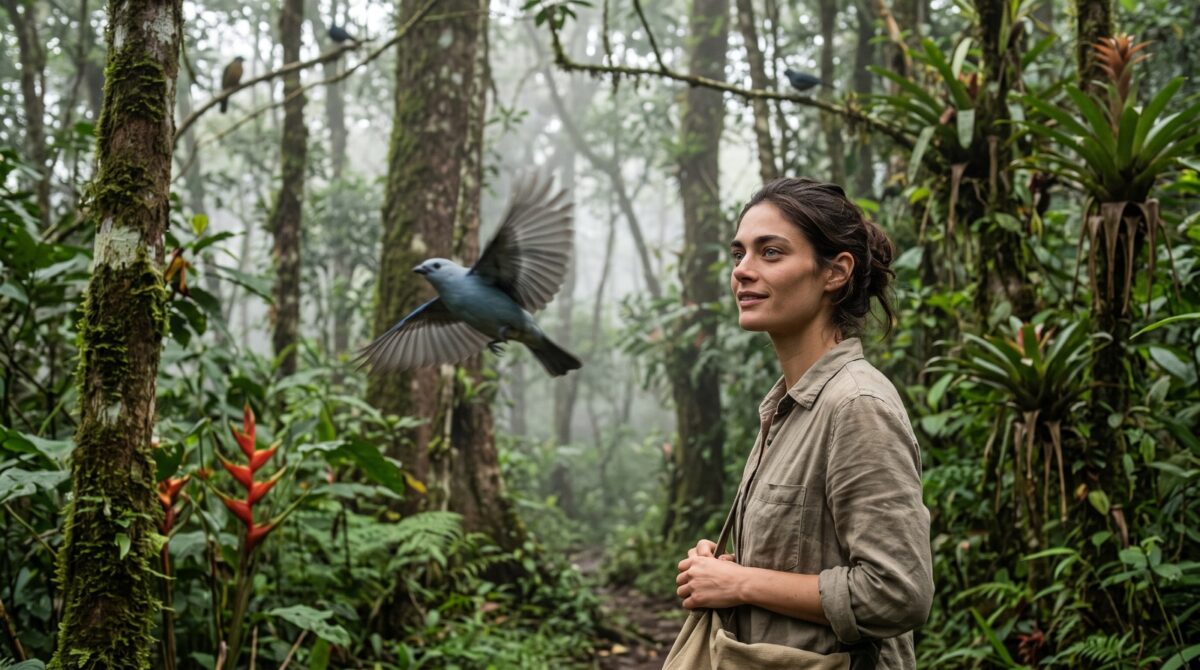
Before sunrise, the forests are already awake.
Among the leaves, branches, and vegetation, hundreds of different sounds begin to emerge. Some belong to birds that are easy to recognize. Others last only a few seconds and come from species that are rarely seen.
For researchers, each of these sounds can contain valuable information. The problem is that listening to and analyzing thousands of hours of recordings requires time, specialized knowledge, and significant resources.
Now, artificial intelligence is helping process this enormous volume of information.
In Latin America, the Escucha Aves project is using acoustic monitoring and AI to identify bird species and generate information that can help improve the management of conservation areas in the Tropical Andes. One of the tools developed for this project is Chorus, a platform that processes recordings of sounds from nature and turns them into data that can be reviewed by specialists.
It is a story that shows a particularly interesting side of AI and biodiversity: sometimes, protecting nature also means learning how to listen to it.
When AI Starts Listening to Nature
For years, one of the most common ways to study birds has been to observe them directly.
But many animals are difficult to find. Some live in the treetops, others move quickly through the vegetation, and many are easier to hear than to see.
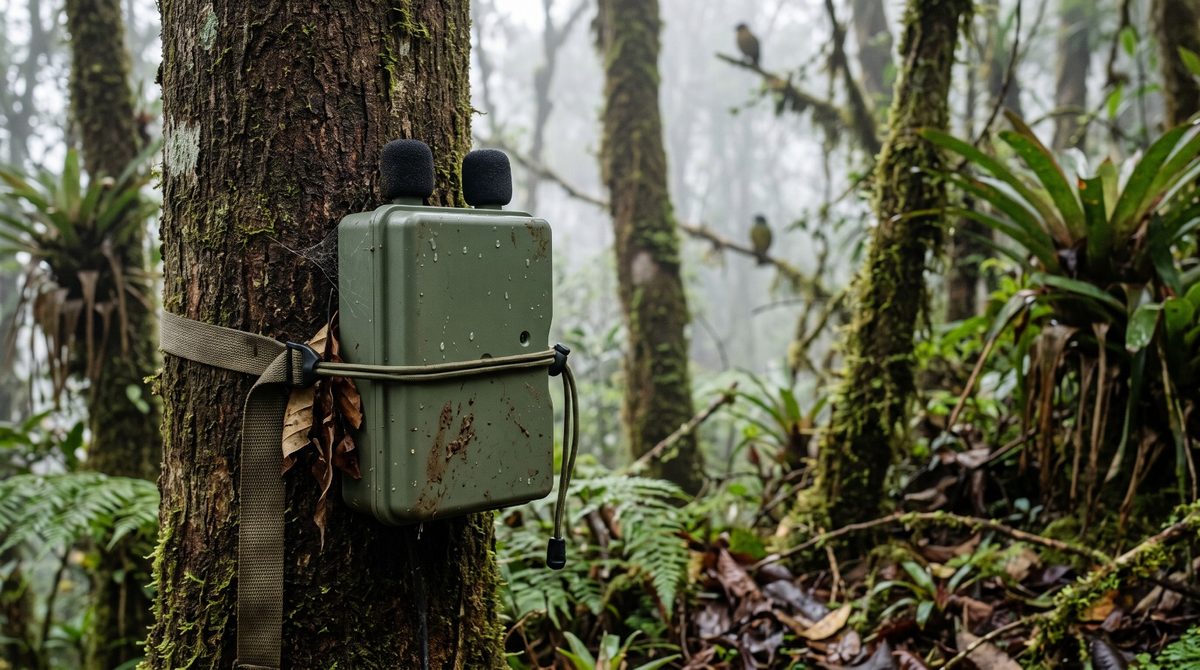
That is why passive acoustic monitoring uses small devices capable of recording environmental sounds over long periods.
In the Escucha Aves project, local communities and organizations use these recorders to capture sounds from different territories. The recordings can contain information about which species are present and how biodiversity changes over time.
The challenge comes afterward.
When thousands of hours of audio accumulate, someone has to listen to them, identify the sounds, and organize all that information.
And that is where AI and biodiversity come in.
An AI That Turns Sounds into Information
Chorus is a tool created to help researchers and conservation organizations analyze the sounds of nature using artificial intelligence. The project brings together specialists in birds, technology, and conservation to turn thousands of recordings into useful information for protecting biodiversity.
And there is something important: AI does not replace human validation.
Specialists can listen to the recordings again, examine spectrograms, compare reference sounds, and confirm identifications before using the results for ecological analysis.
Technology accelerates the work, but decisions continue to be supported by people who know the territory.
That balance is one of the most interesting parts of this story.
Latin America Has Something Very Important to Listen To
The project began with monitoring deployments in Colombia and aims to extend this model to other countries in the region.
Audubon explains that Escucha Aves is being implemented at different sites in Colombia, Peru, and Bolivia, with the goal of generating evidence to help improve the management of new protected areas.
In Colombia, the first datasets collected in the field are already entering the Chorus processing workflow.
This means that recordings made in the forests can begin to be transformed into structured information about the species detected.
And the more information that is collected, the more opportunities there are to compare different places and moments.
AI and biodiversity find a particularly useful application here: turning something as difficult to organize as the sound of a forest into data that can help us understand what is happening within it.
Technology Can Also Stay Close to Those Protecting the Land
Perhaps one of the most valuable aspects of the project is that it is not designed exclusively for large research centers.
Chorus is being developed together with organizations and professionals working directly in conservation across Latin America. The idea is to reduce technical barriers so that those already conducting monitoring can use advanced tools without having to become artificial intelligence specialists.
Audubon also states that the project aims to increase local capacity to manage biodiversity data.
This changes the perspective.
The technology is not simply there to collect information and take it somewhere else. The intention is for the data to remain close to the people who work every day to protect these ecosystems.
And that can be essential for turning information into conservation decisions.
Listen Better to Protect Better
One of the most interesting ideas behind Chorus is actually found in its name.
In English, dawn chorus describes the moment at sunrise when different birds begin singing at the same time. It is a kind of natural concert that, besides being beautiful, contains information about the species present and the rhythms of an ecosystem.
Technology is trying to harness precisely that richness.
Instead of asking a person to listen to thousands of hours of recordings one by one, AI can help identify patterns and possible detections within enormous amounts of audio.
Specialists can then focus on reviewing what truly matters for each project.
This can free up time for something even more important: understanding how biodiversity is changing, evaluating conservation efforts, and deciding where action is needed.
AI and biodiversity are not only about recognizing a species.
They can also help transform scattered information into knowledge that makes it possible to better protect a territory.

A New Way of Looking at Nature
For a long time, observing nature meant looking.
Now it also means listening.
Sensors can remain for hours in places where a person could not stay all the time. Artificial intelligence can help process the recordings. And communities and specialists can interpret the results and turn them into useful knowledge for conservation.
The project is still under development, and its next stage involves processing large volumes of data and continuing to improve the tool alongside its conservation partners. Although it began with a focus on birds, the infrastructure could eventually be adapted to other ecosystems, species groups, and conservation goals.
Perhaps that is the most hopeful part of this story.
Artificial intelligence does not always have to take us away from nature.
It can also help us get closer to it.
To listen to sounds that were previously too numerous to analyze, discover which species share a territory, and gather information that can support better decisions.
Because in the forests of Latin America, an enormous amount of life has been speaking in its own language for centuries.
Now we have a new tool to listen to it.
And when we learn to listen to nature better, we also increase our chances of protecting it.
AI Also Invites Us to Look Beyond
At BIKY.ai, we work every day with artificial intelligence applied to sales, but stories like this remind us that its possibilities extend far beyond our industry.
We are interested in these projects because they show something we also share in our own field: when technology can transform large amounts of data into useful information, it can help people make better decisions.
In this case, that data comes from the sounds of a forest and can contribute to protecting biodiversity. In other contexts, it can help us better understand a customer, a conversation, or a sales opportunity. The purpose changes, but the underlying idea remains the same: use technology to turn information into meaningful actions.