
The new sales metric is the time between “I want it” and “I’ve already paid”

The sale isn’t closed when the customer says “yes”; it’s closed when they pay. And if payment is left out of the conversation, the sale is at risk. That’s where BIKY PAY goes beyond being just a financial module and becomes a source of valuable business metrics.
Sales teams have always measured performance with classic metrics: close rate, revenue sold, number of opportunities won. All of them are still useful. But they increasingly describe what really happens in chat based sales less accurately. In that context, BIKY PAY introduces a more precise view: the real critical moment is not the customer’s “yes,” but the time that passes between “I want it” and confirmed payment, and that is only possible when you have conversational payments.
The time between a customer saying yes and the payment may seem short, but it actually contains one of the most expensive leaks in the funnel. When payment leaves the chat, intent cools down, visibility breaks and the operation ends up reconciling manually.
BIKY.ai defines the problem clearly: in conversational commerce, if payment becomes a parallel process, conversion drops. But when conversational payments exist, everything flows better for both the customer and the seller.
That is why the KPI changes. It is no longer enough to know how many customers said yes. You need to measure how many moved from intent to transaction without losing context, without friction and without chasing payment receipts afterward. In short, BIKY.ai turns payments into a measurable commercial operation.
The hidden problem: many teams celebrate a sale that does not exist yet
In many companies, the sale is considered won too early. The customer accepted the proposal, asked for the payment link, confirmed interest or said they would pay “in a moment.” Commercially, that is often interpreted as a close, but operationally, it is not.
Between “I want it” and “I already paid” lies one of the biggest funnel leaks. The customer gets distracted, postpones, changes priorities or loses momentum. If payment requires manual transfers, separate receipts or human reconciliation, intent loses strength.
What looked like a guaranteed sale becomes a pending payment with no clear owner. And this only has one solution: conversational payments.
The KPI that really matters in conversational payments: time between intent and payment
This is the central idea. In conversational sales, a more useful KPI than the traditional close rate is the time between the moment the customer expresses intent and the instant the payment is approved.
Why? Because that metric measures something deeper than a rate. If that time is short, it means the experience is well designed, payment is clear and the operation reacts at the right moment. If that time is long, the company is leaving room for abandonment.
This KPI is also more honest. It forces teams to see the sale as a complete flow: conversation, decision, payment and next action. Not as disconnected stages where each team pushes as far as it can and then drops the case. BIKY.ai and its payments module work precisely on that continuity: collect payment, confirm it and trigger the next step without breaking the chat thread.
What changes when payment happens inside the conversation
The change is not only technical. It is psychological and operational.
When the customer decides to buy inside the chat, the moment of highest intent is active. If at that instant the seller can send a conversational payment request with the exact amount and a secure link in the same thread, the sale keeps momentum. If instead the customer has to leave the flow, search another channel, make a transfer or send proof of payment, momentum fades.
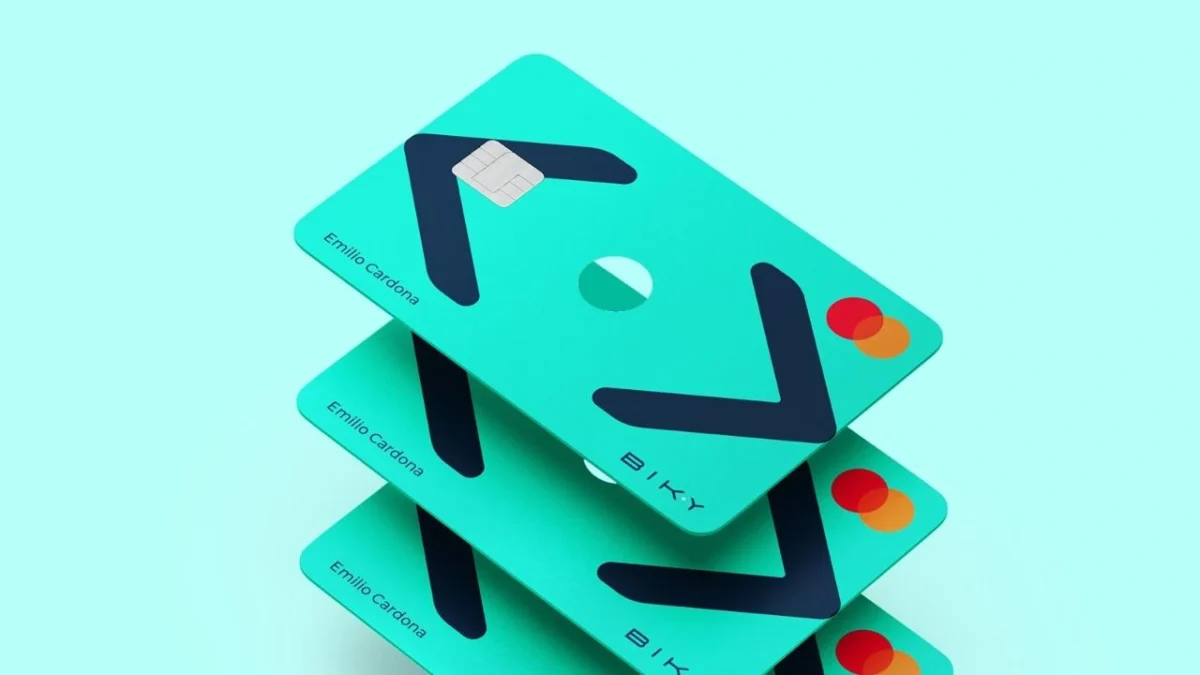
BIKY PAY turns intent into transaction without breaking chat continuity. According to its official description, it allows payment requests through WhatsApp with secure links, automatic confirmation and receipts inside the same thread. The checkout is designed so the customer understands what they are paying for, why they are paying and completes it in seconds, without “send me the receipt” or manual steps.
From a commercial perspective, that matters because it reduces the most fragile part of the process. The seller no longer chases. The process collects payment at the exact right moment and enables conversational payments.
Before: a salesperson closed, then someone else reconciled
In a traditional model, the story usually looks like this. The salesperson advances the conversation, handles objections, gets buying intent and sends payment instructions. From that point, the process becomes fragmented.
Finance or someone on the team checks whether the money arrived. The customer sends proof of payment. References are matched. Sometimes information is missing. Sometimes the amount does not match. Meanwhile, no one knows for sure whether the operation moved forward or stalled.
That process is expensive for three reasons. First, it consumes valuable human time on tasks that should not depend on scattered messages. Second, it breaks real traceability between conversation, opportunity and transaction. Third, it pushes the organization into a reactive mode: it only acts when it notices something did not happen.
BIKY PAY changes that sequence by making payment part of the funnel, not a parallel task. Every transaction is linked to the customer, the conversation and the opportunity, with a history of attempts, approvals, rejections and refunds for cash control, auditability and real attribution. All of this is possible through conversational payments.
After: the operation charges, confirms and acts automatically with conversational payments
This is where the real value of BIKY.ai appears. Payment is not an administrative ending. It is an operational signal.
When the status of a transaction changes, BIKY PAY turns it into action: it notifies, updates the opportunity, triggers follow up and prevents a pending payment from becoming a lost sale. It also connects with Smart Chat, CDP, CRM and Flows so that an approved payment activates the next step: delivery, invoicing, onboarding, scheduling or post sale actions.
That has a direct effect on commercial work. The seller stops chasing receipts and stops sustaining the sale with improvised reminders. They can focus on where human value really matters: clarifying, negotiating, strengthening intent and guiding decisions.
Why this metric is worth more than the classic close rate
Close rate is still useful, but it has an important limitation: it can hide too much. It does not show whether intent is being lost because of payment friction. It does not reflect how long it takes to turn agreements into transactions. It does not explain whether the company has too many yeses that never become collected revenue.
The time between “I want it” and “I paid” reveals all of that. It measures real monetization speed. It measures payment clarity. It measures operational continuity. Above all, it shows whether the company is designed to capture the exact moment when the customer is most ready to act.
For sales and finance leadership, this makes perfect sense. A healthy funnel is not one that accumulates verbal closes. It is one that converts intent into cash with the least possible friction. When the time between intent and payment grows longer, conversion declines, CAC increases and business predictability suffers. The solution is conversational payments.
The impact on experience: paying should not feel like another process
One of the most common mistakes is thinking payment is just a mandatory step. In reality, it is also part of the experience.
If the customer has been going through a clear and fast conversation and suddenly enters a confusing sequence of transfers, bank references or manual validations, the tone of the experience changes. It moves from progress to bureaucracy. And when an experience becomes bureaucracy, intent cools down.
BIKY PAY is designed to handle local and global payments through a single layer using Stripe and Mercado Pago, maintaining consistency of statuses, events and reconciliation. It also includes refunds and disputes with traceability and clear rules to protect margins without improvisation.
That matters because customers do not separate departments. They do not think, “this is no longer sales, now it is finance.” For them, it is still the same experience. If that experience breaks during payment, the entire brand pays the price.

A sale without payment traceability is still a blind funnel
Here another strategic advantage appears. Many companies still measure the top of the funnel in detail and the bottom with too much opacity. They know which campaign generated the lead, which channel opened the conversation and which advisor handled the case. But when payment arrives, the thread gets cut.
The BIKY PAY approach insists on the opposite: clear attribution from conversation to opportunity to payment to result. Everything remains visible in real time with statuses, owners and traceability by case.
That changes how marketing and sales are understood. Marketing stops optimizing only for declared intent and can see real monetization. Sales stops debating wins that were never collected. Operations and finance stop reconciling in the shadows, and everything returns to a single source of truth.
What salespeople gain when the system handles payments well
When payment happens inside the conversational flow and actions are triggered automatically, the sales team gains three very concrete advantages.
- They gain speed, because the customer pays while desire is still active.
- They gain focus, because they stop spending time on reconciliation tasks.
- They gain precision, because the system shows which payments are pending, approved, rejected or disputed, and what the next step should be.
That unlocks human potential. The salesperson goes back to doing what they do best: interpreting intent, handling objections, negotiating and closing. They do not disappear. They simply stop dragging tasks that should never depend on them.
This logic applies especially well in scenarios such as:
- Reservations and deposits
- Advance payments to secure inventory or availability
- Abandoned carts recovered through conversation
- Appointment confirmations with prepayment
- Upgrades, renewals and post sale offers
In all these cases, the critical point is not convincing the customer to talk. It is moving them from intent to payment without losing momentum. That is why the KPI between “I want it” and “I paid” is far more useful than many traditional metrics that arrive too late.
What implementing BIKY PAY means for a company
We are in a moment where many companies are reviewing commercial processes, operating costs and execution tools. In that analysis, it is worth asking an uncomfortable question: how many “closed” sales this year were not actually collected at the right speed?
That matters because it affects real conversion, cash timing, operational workload and customer experience. It also matters because efficiency demands will keep increasing. It will not be enough to generate interest. Companies will need to capture it better, collect faster and operate with less friction.
BIKY.ai with its conversational payments fits perfectly into that logic: it turns payments into part of the funnel instead of an external procedure, connecting conversation, payment and next action with operational visibility and traceability.
And in the end, it also puts a more honest metric on the table for conversational sales: the time between “I want it” and “I paid.” Because that is where it is truly decided whether intent becomes real business.